


Double & triple glazing
Double and triple glazing provide options for different thermal targets, matched to the selected frame.

Create comfortable, light-filled spaces with glazing selected around your climate, building and everyday needs.
Explore APRO double and triple glazing, Low-E and laminated options. We coordinate glass, frame and hardware to balance thermal comfort, daylight, safety and acoustic requirements.
Find your glazing configuration ↗︎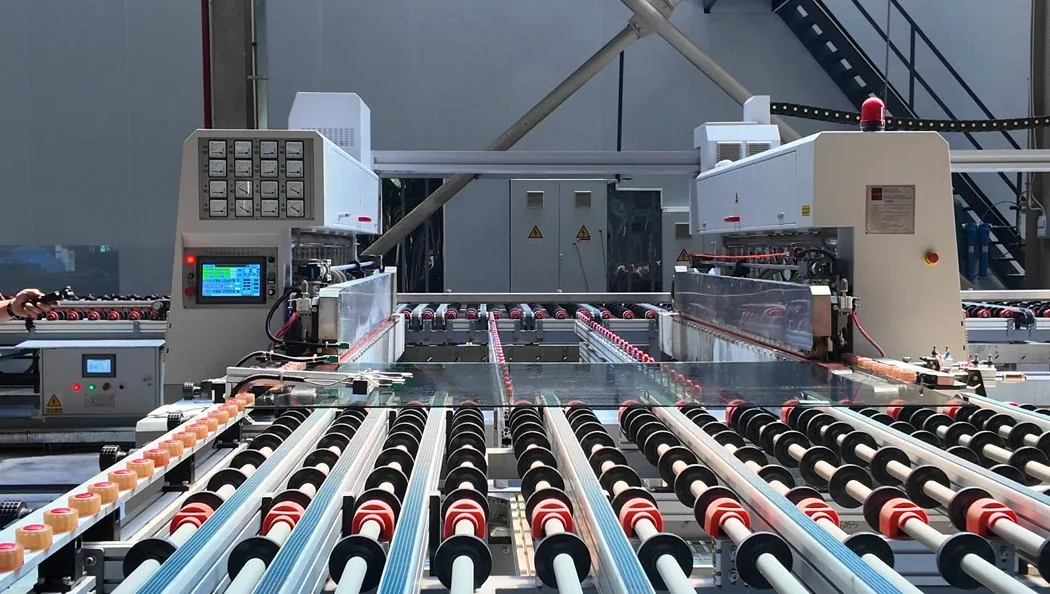
Combine construction, treatment and coating to suit your project. Explore the illustrated guide below.
Double and triple glazing provide options for different thermal targets, matched to the selected frame.
Specify Low-E coatings and air or argon fill together to balance heat transfer, solar gain and daylight.
Tempered and laminated constructions address different safety needs and can form part of an insulating-glass unit.
Vacuum glazing is available for a specified folding-door configuration. Special options follow their matching system.
Compare the layers, understand their roles and see how they work together.
Select a glass type to see its construction.
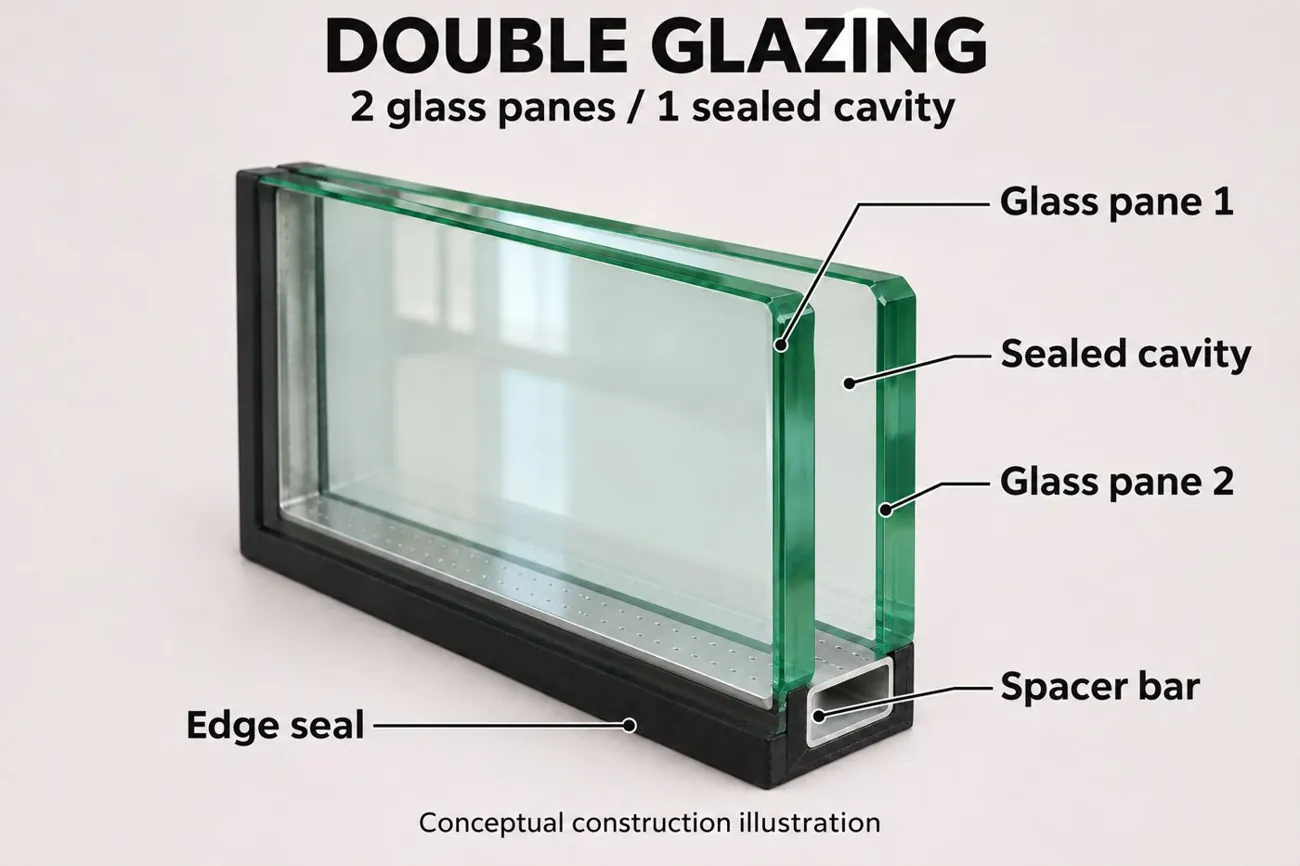
A spacer maintains the gap; edge seals enclose the cavity. Specify air or argon fill—appearance alone does not identify the gas.
Construction illustration only. Glass thickness, cavity and fill follow the selected specification.
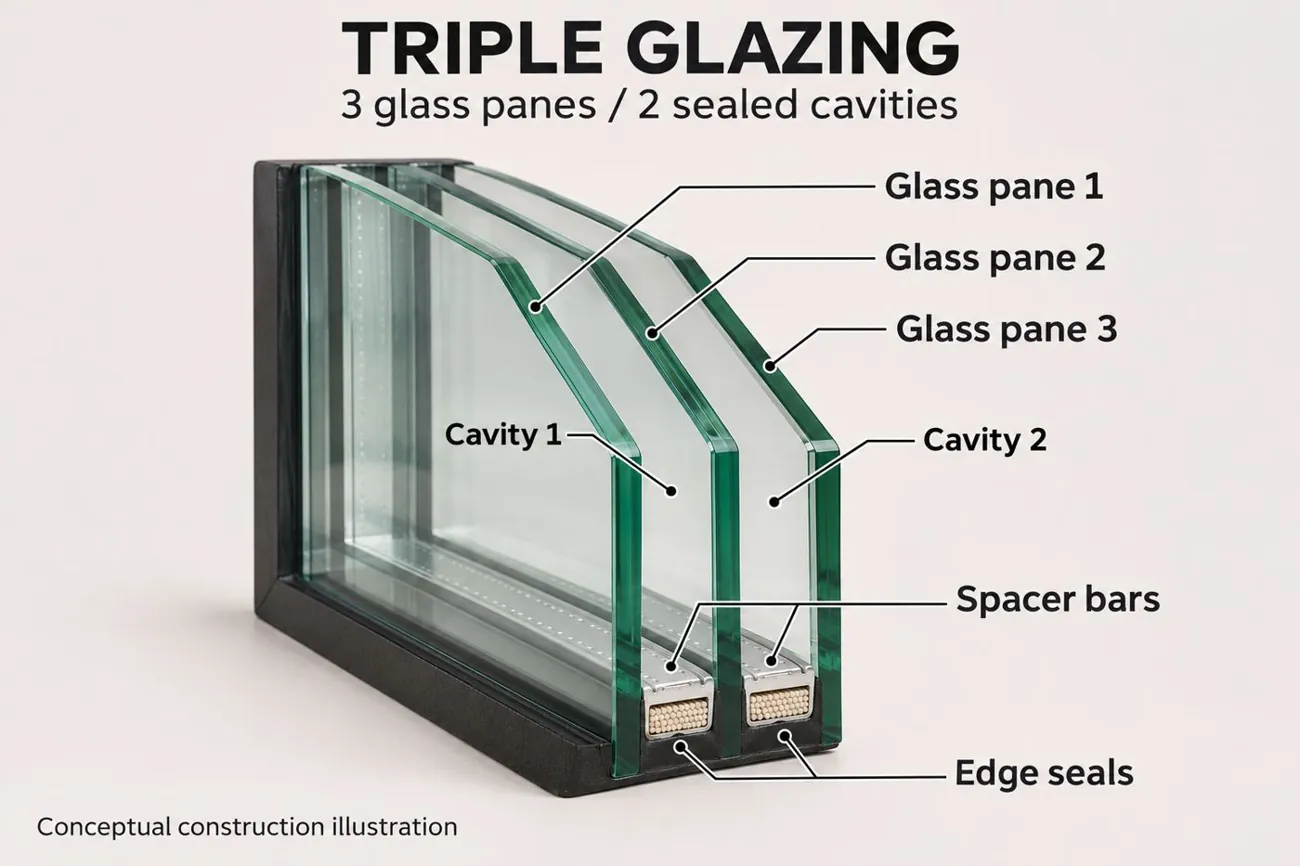
Two sealed cavities, combined with suitable coatings and fill, offer another route to thermal targets. The frame must accommodate the added thickness and weight.
APRO offers triple glazing for selected casement-window and door systems. Compare whole-product performance, not pane count alone.
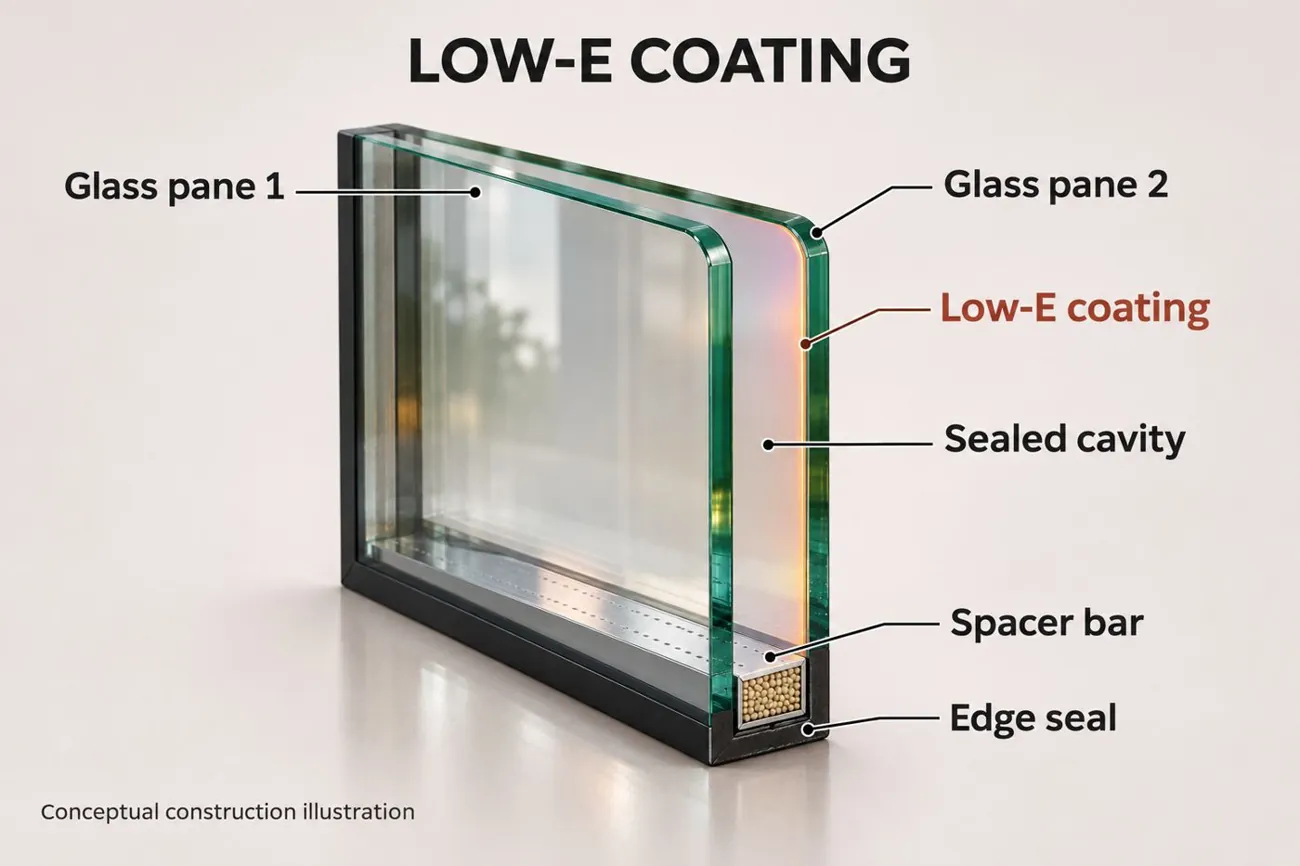
Low-E reduces radiative heat transfer. Different coatings balance solar gain and daylight, and can be combined with double or triple glazing and the specified safety treatment.
Coating shown enlarged for explanation; its position follows the specification.
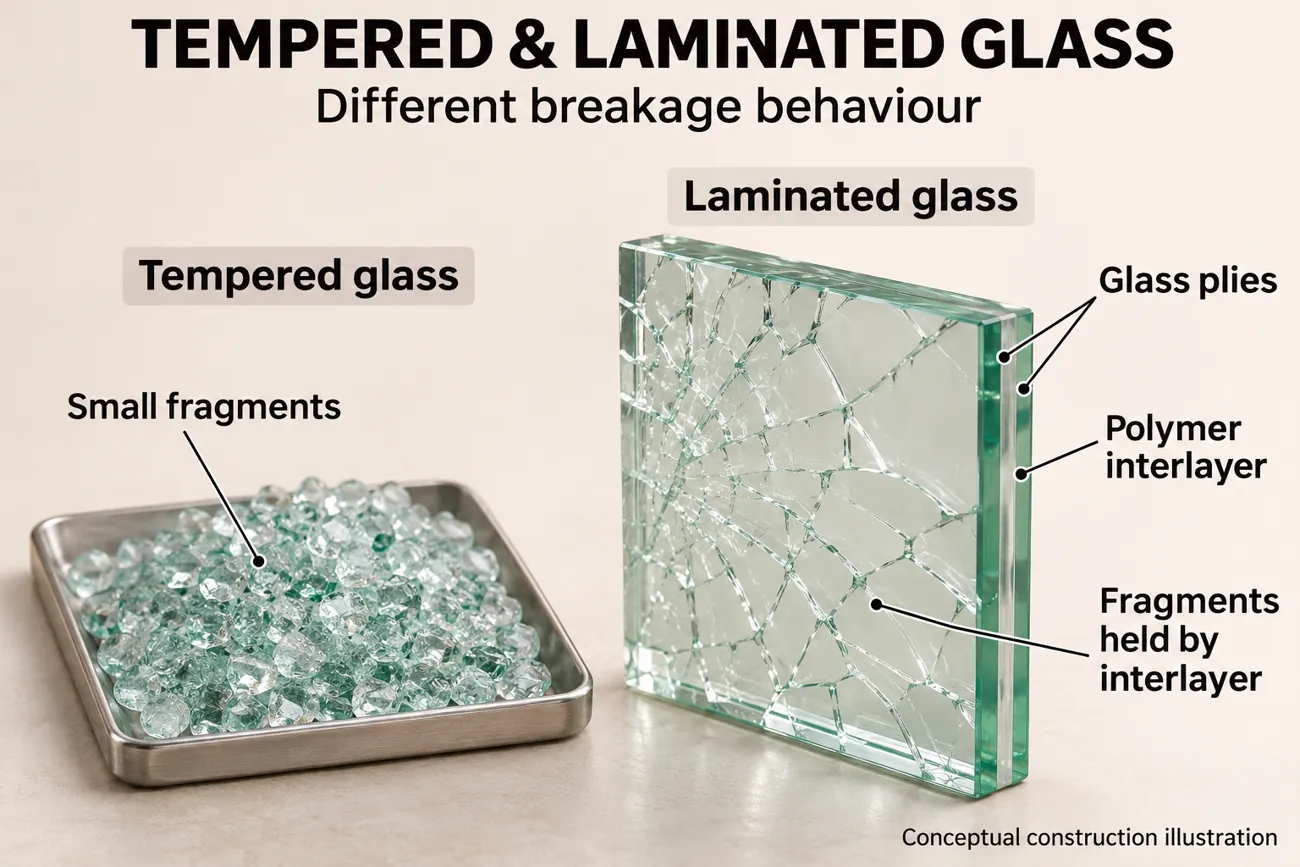
Tempered glass breaks into small fragments. A laminated interlayer can help retain broken pieces. Select the construction for its location and project requirements; this illustration shows no impact or security rating.
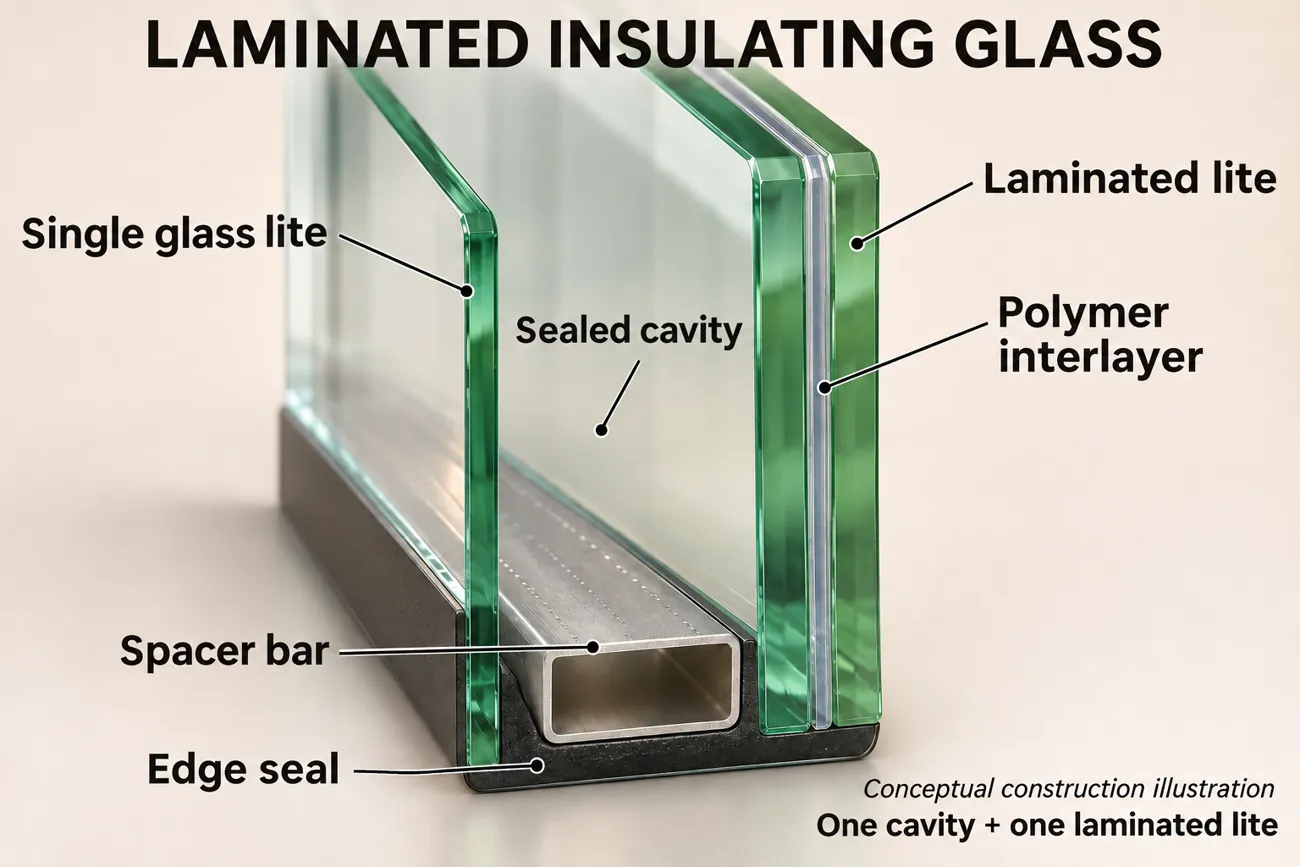
An interlayer bonds the laminated plies; a separate cavity provides the insulating-glass construction. APRO offers this combination for selected casement-window and door systems.
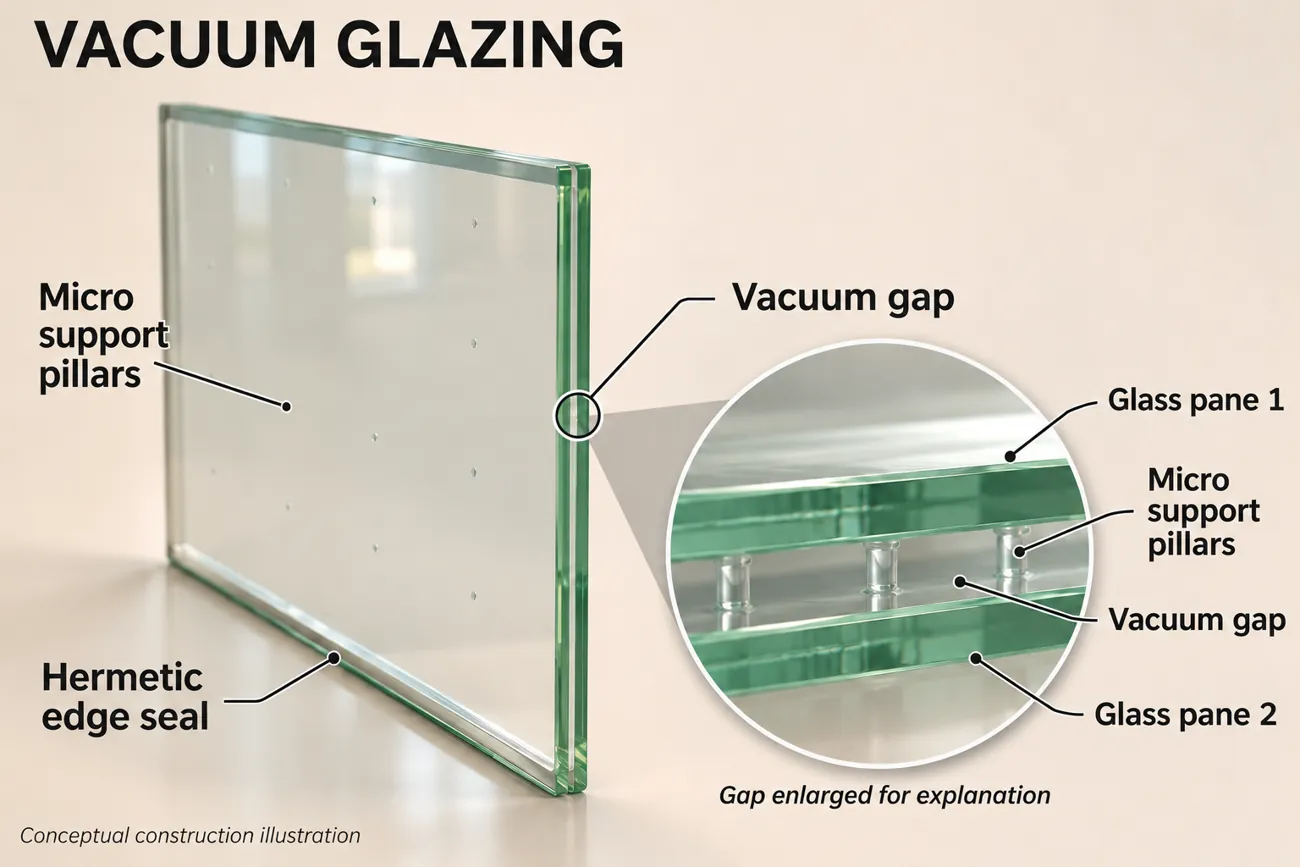
An evacuated gap, micro support pillars and a hermetic edge seal distinguish vacuum glazing from conventional insulating glass. APRO supplies it for a specified folding-door configuration.
Generic construction, not to scale. The build-up follows the selected system.
Conceptual construction illustrations. Dimensions and performance follow the selected system and configuration.
Glass units may look alike yet differ in long-term clarity and thermal performance. Material compatibility, clean preparation and consistent edge sealing help explain the value of a well-made unit.
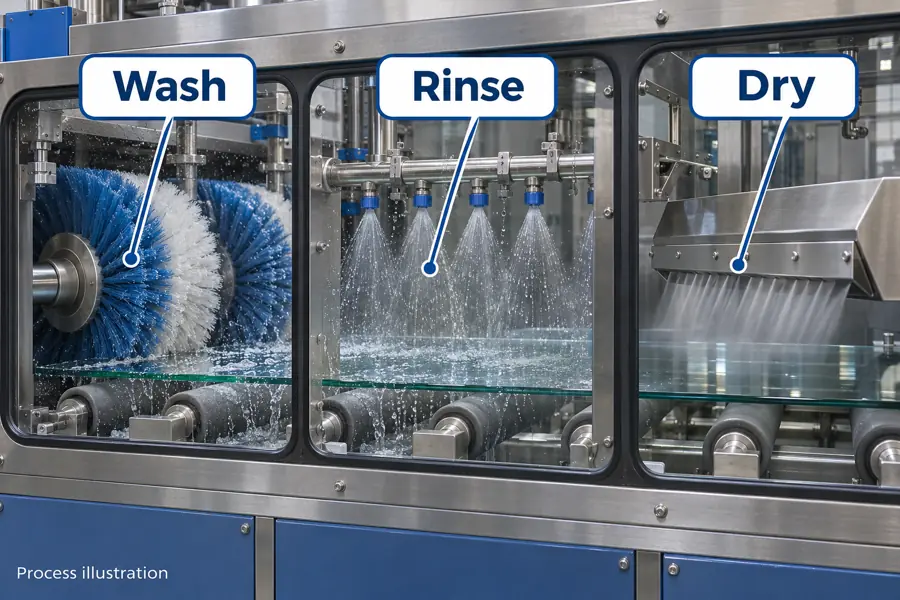
Glass washing and air drying before assembly.
Removing residues and moisture prepares the bonding surfaces for adhesion. Clean handling after washing helps keep contamination out of the cavity and off the seal interface.
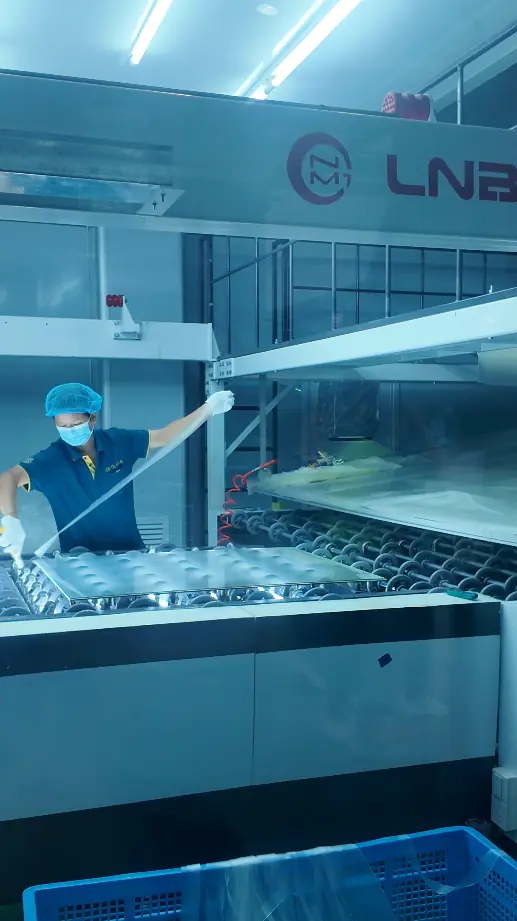
An operator handling glass during production.
Clean working conditions and careful handling limit contamination. Properly set and maintained automated equipment can improve positioning and application consistency, supported by process checks.
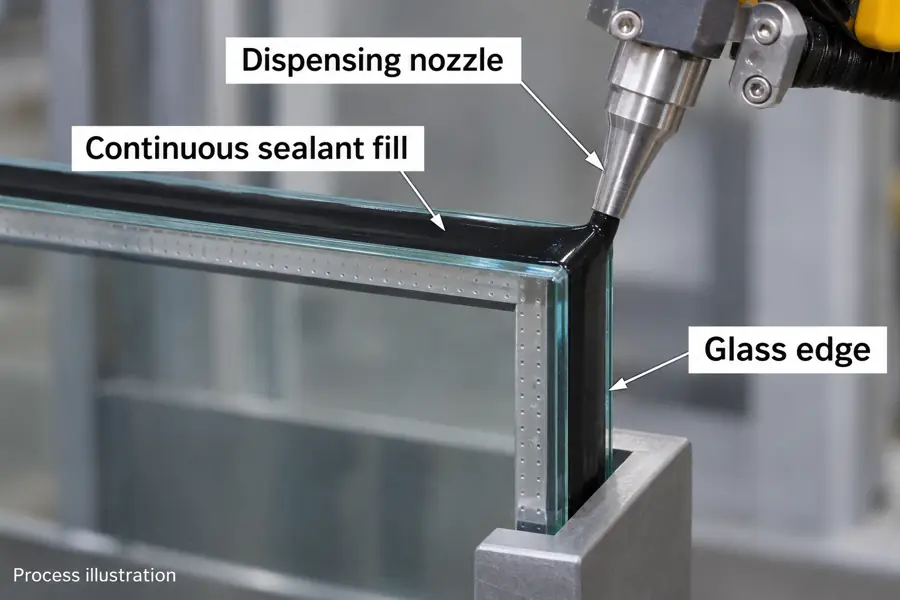
Illustration of secondary edge-seal application.
The primary seal limits moisture entry and gas loss; the secondary seal supports the edge assembly. Compatible materials, continuous contact and correct curing matter, especially around corners and joints.
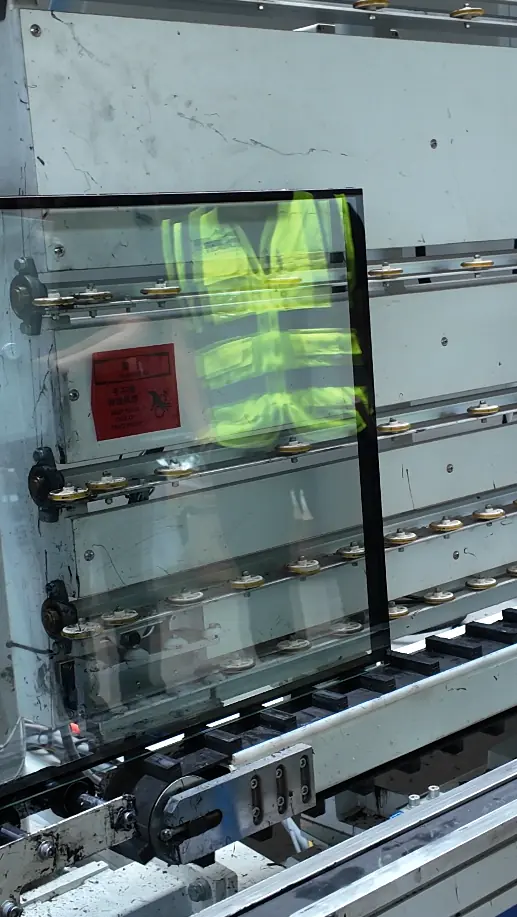
A glass unit with a dark perimeter on the conveyor.
Checks of pane alignment, edge condition, appearance and seal quality help reveal assembly defects beyond pane count or thickness. The spacer and desiccant specification also matters to cavity geometry and moisture control.
APRO matches glass thickness and weight with the frame, support, seals and hardware to develop a complete window or door specification.
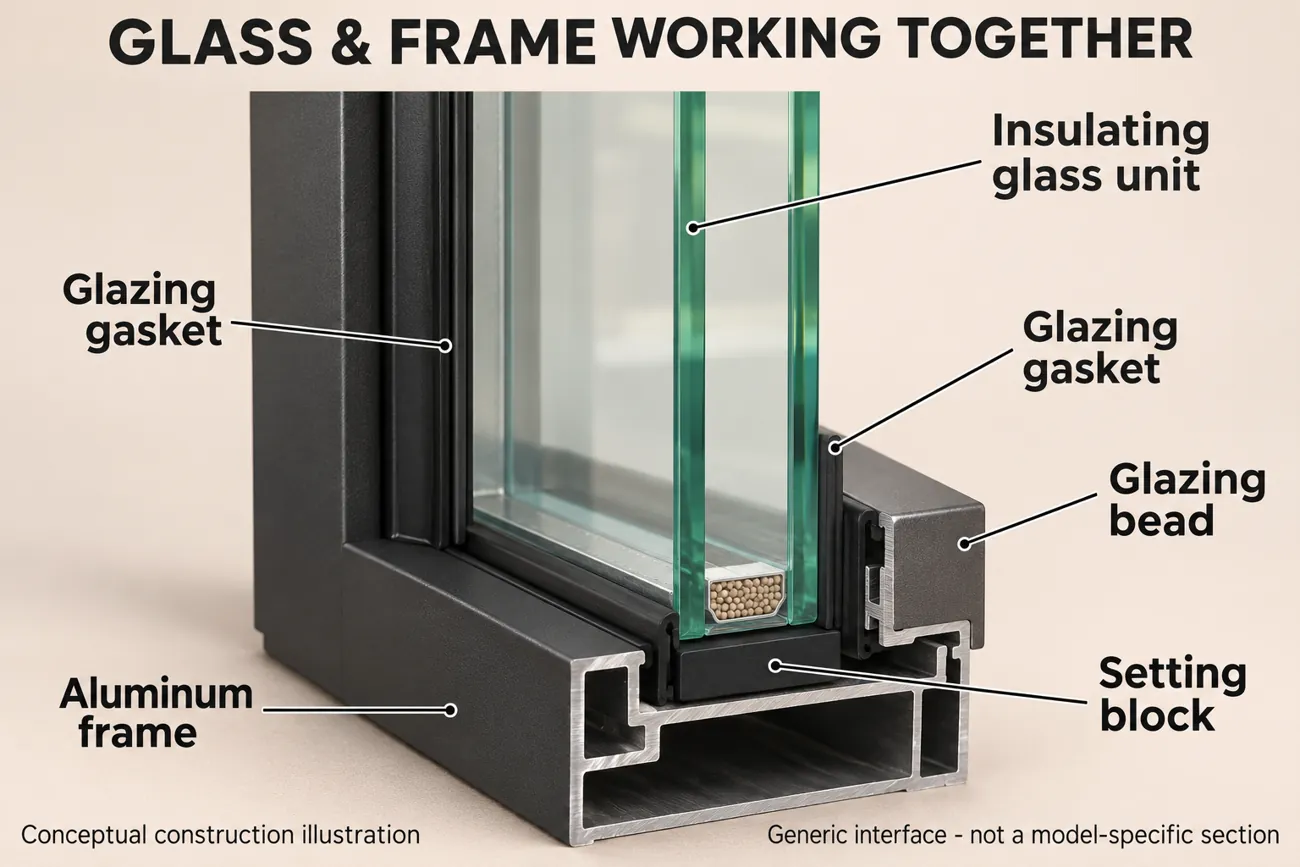
Setting blocks support the glazing; gaskets and the glazing bead locate and retain it within the frame. These interfaces are coordinated with the selected glass and product design.
Generic interface illustration. Actual details follow the selected system drawings.
