

















Takeaways:
-
Nail fins are ideal for new-construction windows, where the wall sheathing is visible during installation.
-
They provide structural anchoring and help create a watertight installation when paired with proper flashing.
-
They are less common in retrofit installations where exterior cladding remains intact; in those cases, other mounting methods may be used.
If you’re shopping for new windows—especially for a new build—you’ll often hear the term nail fin, also called a nailing flange. A nail fin is a small but important part of the window frame that helps secure the window to the house and protect it from air and water leaks.
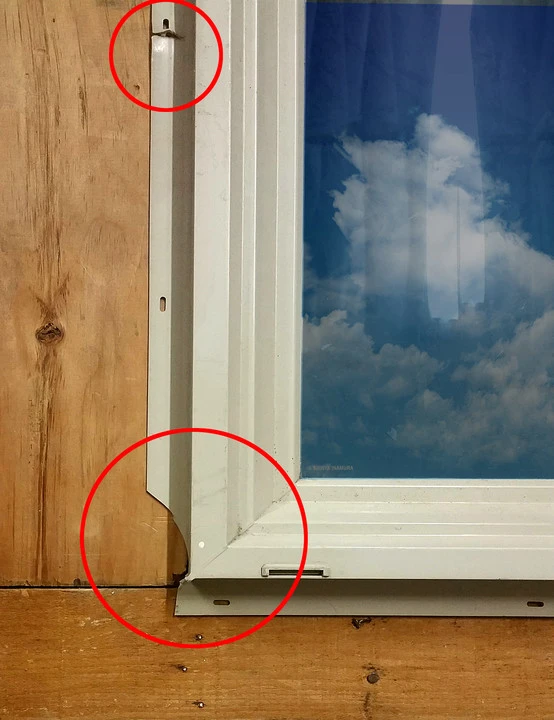
Understanding nail fins matters whether you’re a homeowner, builder, or designer. They determine how the window is installed, how well it seals, and whether it’s suited for new construction or replacement projects. Knowing the difference helps you choose the right product and avoid costly installation mistakes.
Quick Answer: A window nail fin (also called a nailing flange) is a flat strip built into or attached to the window frame’s exterior edge. It is nailed directly to wall sheathing during new construction to anchor the window and create a weather-tight seal. Nail fins are not used in retrofit installations where existing siding remains in place.
What Is a Nail Fin?

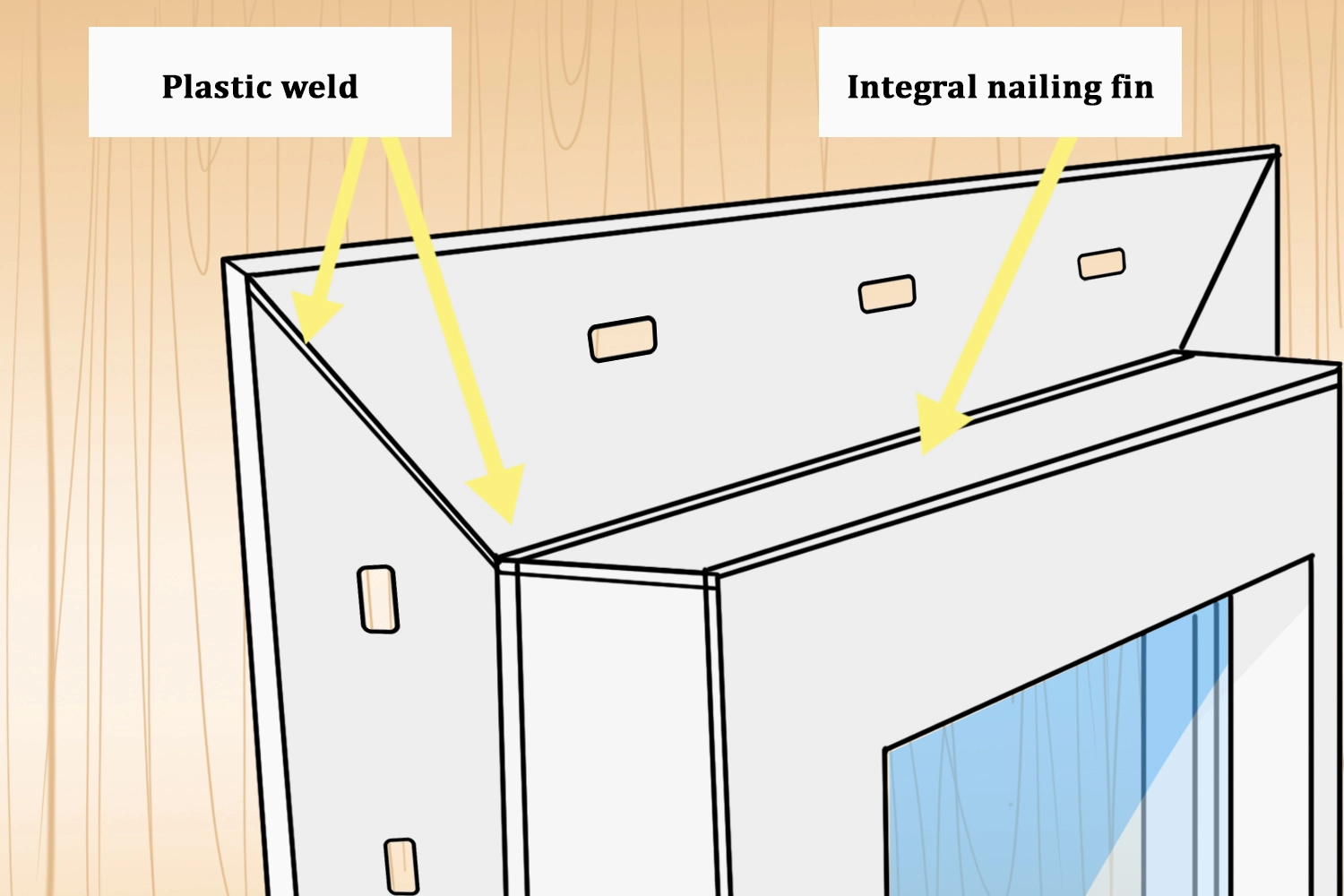
A nail fin is a thin, flat strip—usually made from vinyl or aluminum—that sticks out from the exterior edge of the window frame. During installation, this flange is fastened directly to the wall sheathing using nails or screws, anchoring the window securely into place.
Nail fins also work with flashing and the wall’s weather-resistant barrier (WRB) to create a tight seal. This helps prevent drafts, leaks, and moisture damage around the window.
Nail Fin vs. Front Flange or Other Mounting Flanges
It’s easy to confuse nail fins with other flanges:
-
Nail fin / nailing flange:
Attached to the exterior side of the frame, used to secure and seal the window in new construction. -
Front flange / flush flange:
Sits on the outside face of the wall, commonly used for replacement windows where the existing frame remains. -
Block frame (no flange):
Used when attaching the window inside an existing opening, often in masonry or retrofit installations.
In short:
Nail fins are for anchoring new-construction windows.
Other flanges (or no flange) are used for specific retrofit or frame-in-frame installations.
When & Why Nail Fins Are Used
| Feature | Nail Fin Window | Block Frame (No Fin) |
|---|---|---|
| Best For | New construction | Retrofit/replacement |
| Installation | Nailed to wall sheathing | Fastened inside existing opening |
| Exterior Cladding | Must be exposed | Can remain intact |
| Weather Sealing | Excellent with flashing | Requires careful caulking |
| Cost | Lower (simpler process) | Higher (more labor) |
| Common Materials | Vinyl, aluminum | Wood, fiberglass, aluminum |
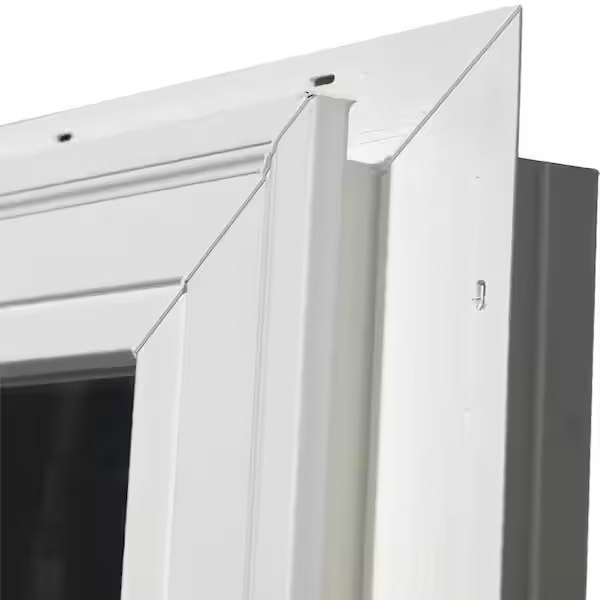
Nail fins are most commonly used in new construction projects, where the wall sheathing is fully exposed. Because the structure is open, installers can fasten the window directly through the fin and into the framing—creating a strong, reliable connection from the start.
Using a nail fin gives you several important benefits:
-
Secure anchoring: The fin holds the window in the correct position while shims and screws are added.
-
Better weather protection: When paired with flashing tape and the home’s WRB (weather-resistant barrier), nail fins help block air leaks and stop water from getting behind the frame.
-
Cleaner installation: They create a simple, consistent method for aligning and fastening windows during framing.
It’s worth noting that nail fins aren’t typically used for retrofit or replacement windows, especially when the existing siding, stucco, or brick remains in place. In those cases, installers choose block-frame or flush-flange windows instead.
Types of Nail Fins
1. Integral Nail Fins
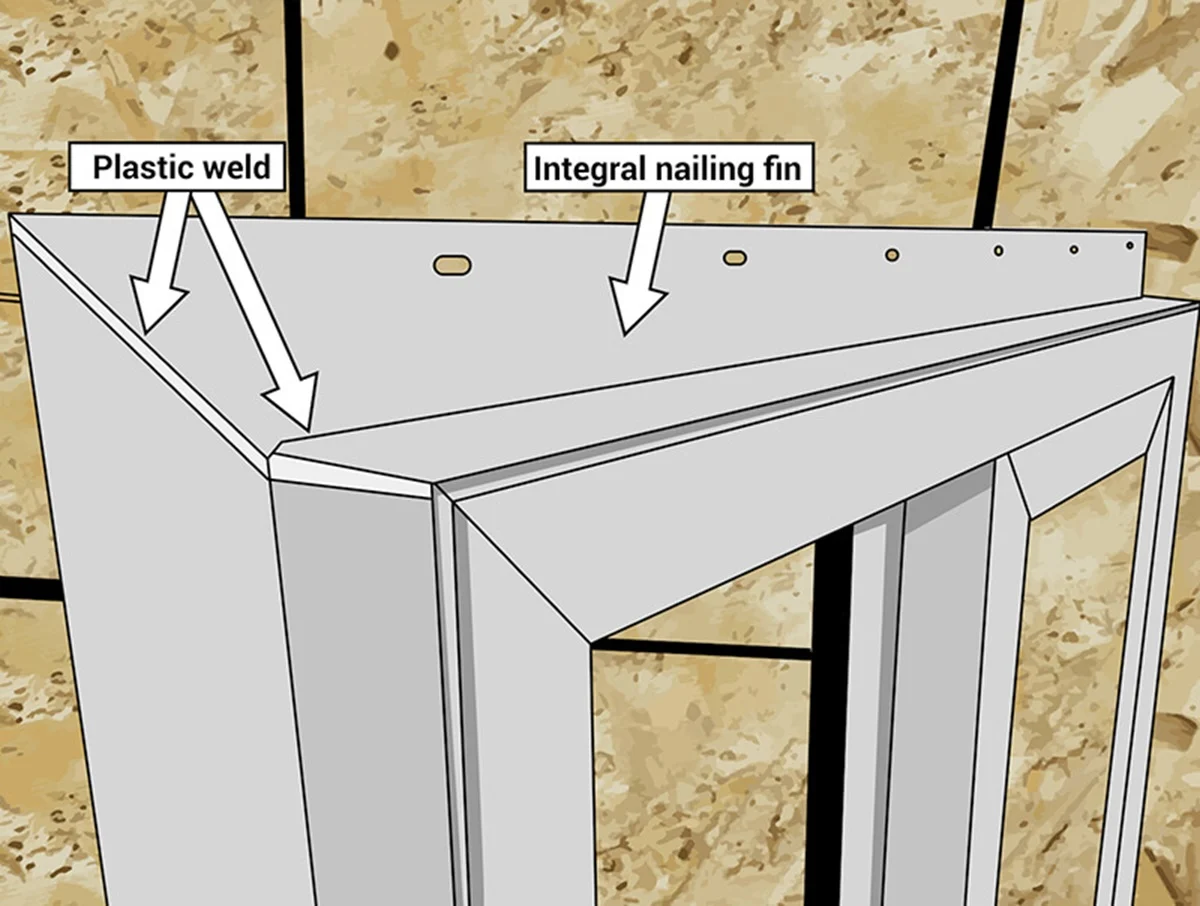
Integral nail fins are built directly into the window frame—they’re part of the extrusion itself. This is especially common in vinyl windows, where the fin and frame are formed as a single piece.
Advantages:
-
Stronger and more rigid
-
No risk of gaps between fin and frame
-
Faster installation, fewer parts
Limitations:
-
Less flexibility if the wall opening isn’t perfectly square
-
Harder to remove if retrofit conversion is needed later
2. Non-Integral (Accessory) Nail Fins
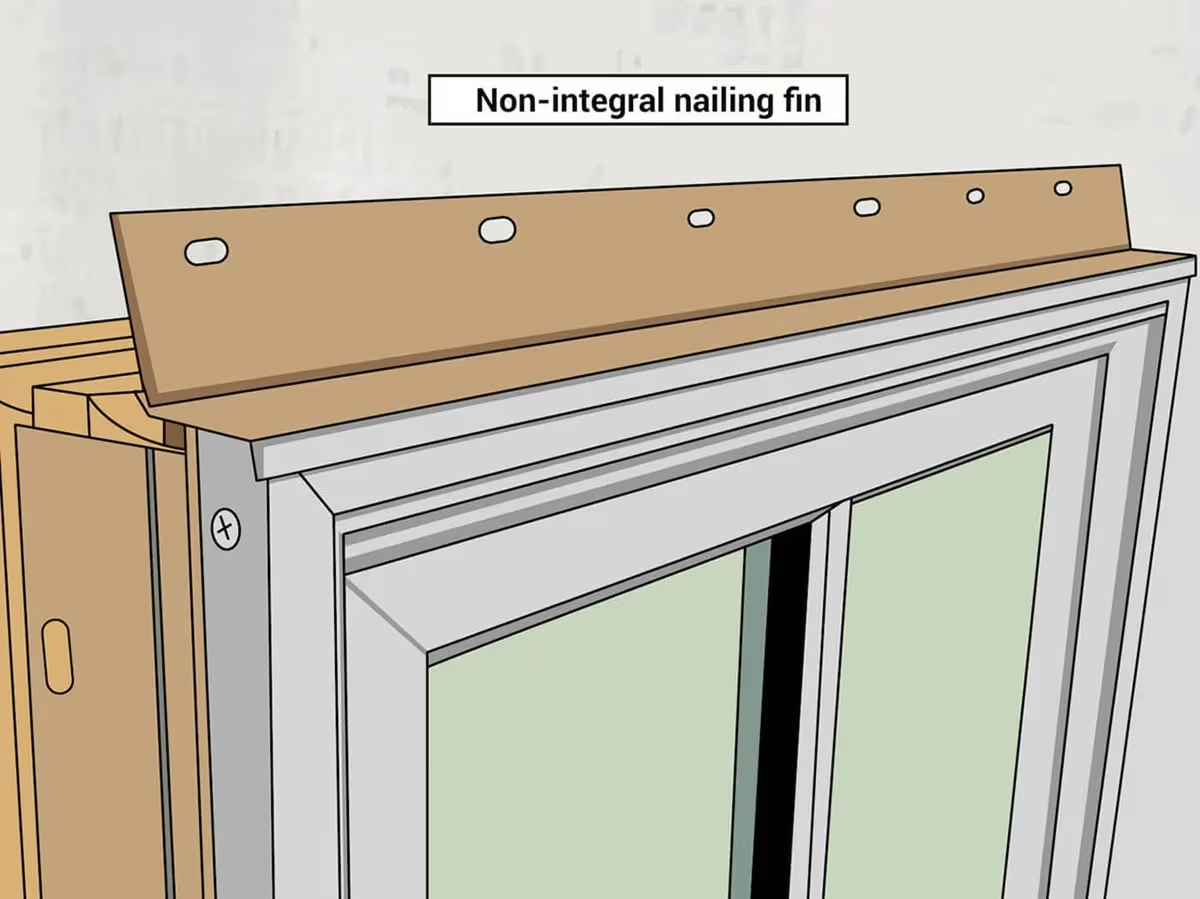
Non-integral fins are separate add-on pieces attached to the window frame during manufacturing or onsite installation. You’ll see these often with wood, aluminum, fiberglass, or composite windows, where the frame structure is more complex.
Advantages:
-
Flexible configuration for different wall systems
-
Can be removed or swapped for retrofit use
-
Helpful for custom or high-performance window types
Limitations:
-
Requires extra sealing between fin and frame
-
More steps during installation
-
Slightly less rigid than integral fins
Advantages & Limitations
Nail fin windows come with clear benefits, especially for new construction. Because the fin attaches directly to the wall sheathing, it creates a stronger, more secure anchoring system than many retrofit options. When paired with proper flashing and a weather-resistive barrier (WRB), nail fins also help form a continuous protective layer that reduces air leaks and keeps water out. This makes them a top choice for builders who want performance, reliability, and clean installation sequencing in new builds.
However, nail fins aren’t perfect for every situation. They’re not ideal for retrofit projects, since using them usually means removing the existing exterior cladding—an extra cost most homeowners want to avoid. Installation also requires more steps, such as flashing the fin correctly and following specific nailing or screw patterns. If the fin is not sealed or taped properly, it can become a path for water infiltration, which defeats its purpose. Proper detailing is essential.
Selecting Windows with Nail Fins: What to Ask
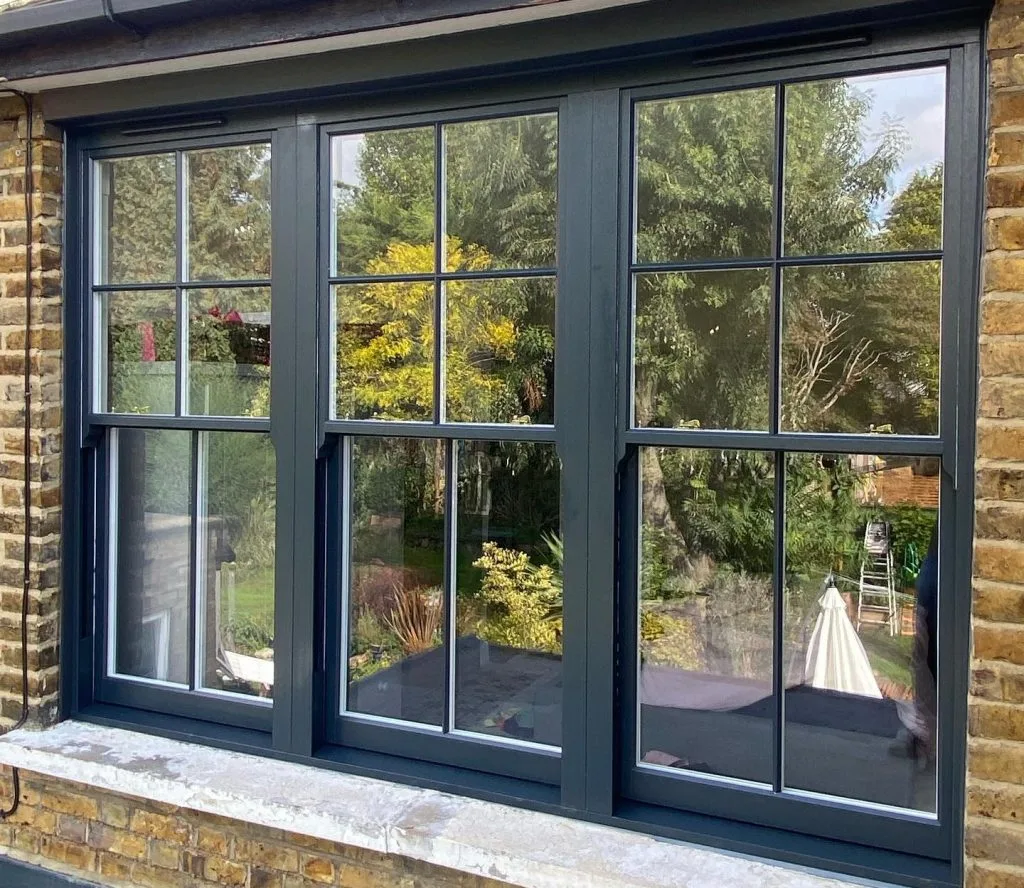
Choosing the right nail-fin window starts with asking the right questions. Here are the essentials:
-
Is the nail fin integral or non-integral?
Integral fins are more rigid and weather-tight, while accessory fins offer flexibility for complex wall systems. -
What do the installation instructions require?
Always confirm the recommended flashing sequence, sealant type, and nailing/screw pattern. These steps ensure long-term durability and prevent leaks. -
Is the window compatible with your wall construction?
Nail-fin windows work differently on wood framing vs. masonry or block walls. Make sure the product is designed for your specific building type.
Asking these questions helps avoid surprises during installation and ensures the window performs as expected for many years.
Ready to Choose the Right Window System?

Selecting the correct window type—especially when it comes to nail fins—can make a huge difference in performance, weather protection, and long-term durability. Whether you’re building a new home, upgrading a commercial project, or comparing installation methods, the right guidance ensures a smoother process and better results.
At AproDoor, we help homeowners, builders, and architects choose the perfect window and door system for their project. From nail-fin new-construction windows to high-performance aluminum frames, our team provides expert support, detailed specs, and tailored solutions.
Contact us today to get expert advice, request a quote, or discuss your project needs. Let’s build it right from the start.
FAQs
Can you install a window without a nail fin?
Yes — you can install a window without a nail fin, using fasteners through the frame or mounting clips instead. However, this method typically requires careful flashing and seal details to ensure weather-tight performance.
How to remove nail fin from window?
To remove a nail fin, you first uninstall the window and cut away the fin where it attaches to the frame, then replace the window or adapt the frame with a flush or block-frame window. It’s typically done when converting to a retrofit installation.
What are the different types of window fins?
There are several types:
-
Integral nail fins: extruded as part of the frame (common in vinyl windows).
-
Non-integral (applied) fins: attached separately to wood, metal, or fiberglass frames and require additional sealing.
-
Flush or finless frames: no protruding fin, used for retrofit installations behind existing cladding.
What is a nail fin on a door?
A nail fin on a door functions similarly to a window nail fin — it’s a thin flange on the exterior edge of the door frame used during new-construction installs to fasten the door and integrate with the weather-resistive barrier (WRB) to provide anchorage and sealing.