We’re Certified by
The Middle East presents some of the world’s harshest environments, demanding window and door systems engineered for heat, dust, and corrosion.
Summer temperatures regularly reach 45–50°C, causing material expansion, seal degradation, hardware fatigue, and long-term system stability challenges.
Prolonged sunlight, strong UV exposure, and high solar gain increase indoor temperatures, raising cooling loads and energy consumption.
Frequent sandstorms carry fine abrasive particles that enter tracks and drainage channels, accelerating wear and operational failures.
High humidity combined with salt-laden air rapidly corrodes aluminum surfaces, fasteners, and hardware, shortening product lifespan significantly.
The Middle East construction market is highly project-driven, where large-scale developments and institutional investors shape how products are selected and approved. Success depends less on quick purchasing and more on structured technical evaluation, consultant alignment, and proven system performance.
Unlike North America’s wood or light steel framing, Middle East buildings rely mainly on heavy concrete and façade-driven systems. This changes installation logic, tolerance control, and how windows integrate with the structure.
Cast-in-place concrete frames deliver high structural strength, but uneven openings, shifting tolerances, and staged pours complicate precise window installation.
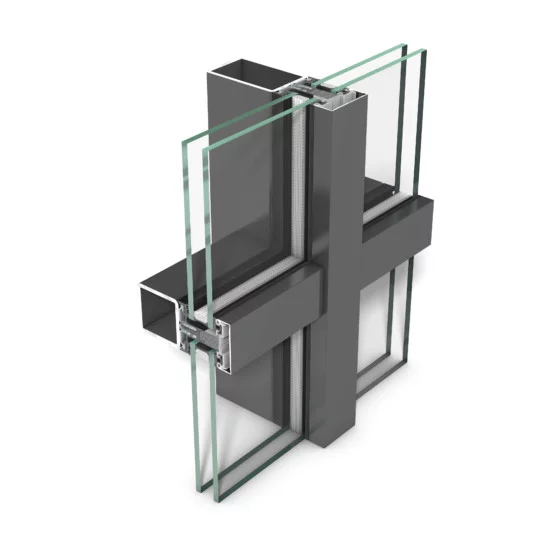
Large unitized or stick curtain wall systems dominate towers, integrating windows directly into façades and demanding coordinated engineering and sequencing.
Concrete block walls finished with stone or metal create irregular openings, requiring adjustable sub-frames and flexible sealing strategies.
In the Middle East, performance is not just about meeting a specification — it’s about surviving extreme conditions year after year. Our systems are engineered to manage heat, movement, corrosion, dust, and structural stress as one integrated solution.
Extreme heat causes noticeable aluminum expansion, while reinforced concrete structures introduce movement and tolerance variations. We design sliding anchors, flexible connection details, and movement-tolerant joints that absorb thermal expansion and structural shifts without stressing the frame or compromising sealing performance.
Long-term exposure to sun, humidity, and salt demands more than standard finishes. We specify certified powder coating systems, controlled anodizing thickness, and corrosion-rated hardware to ensure surface stability, color retention, and structural durability over time.
Landmark projects often require oversized glazing and expansive openings. Engineered frame reinforcements and tested structural calculations ensure stability under high wind loads while maintaining precise alignment and smooth operation.
Yes. Our systems use thermal breaks, expansion-tolerant joints, and heat-resistant seals to prevent deformation, leakage, and premature aging.
No. We design protected tracks, anti-dust seals, and easy-clean drainage to reduce blockage, wear, and operational failure.
Yes. We apply high-grade powder coating or thick anodizing with corrosion-resistant hardware and stainless fasteners for long durability.
Yes. Sliding anchors and flexible connections absorb structural shifts, thermal expansion, and concrete tolerances without stressing the frame.
Yes. Our windows integrate smoothly with unitized and stick curtain wall systems for consistent performance and clean installation.
WhatsApp us