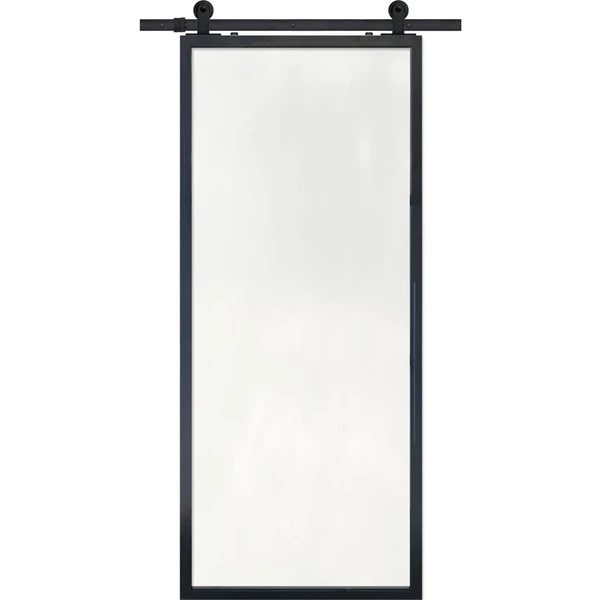


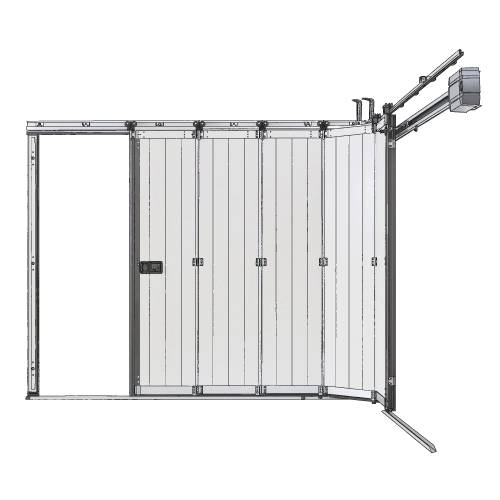

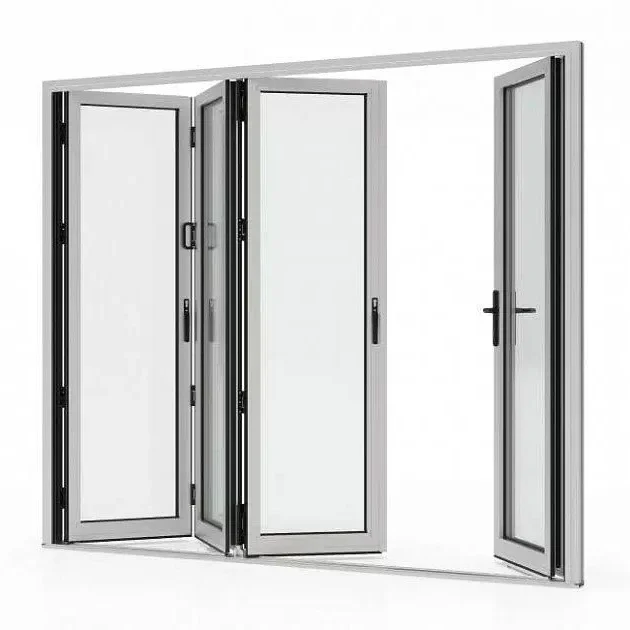










Thinking of adding a barn door to your space? Great choice! Barn doors are not only stylish, but they also save space and add personality to any room. But before you pick your favorite design, there’s one thing you can’t skip: getting the size right.

Why does barn door size matter so much? Because the wrong size can lead to poor coverage, privacy issues, awkward hardware fit, or even trouble sliding. A well-sized barn door, on the other hand, will look balanced, work smoothly, and feel like it was made just for your wall.
In this guide, we’ll walk you through standard barn door sizes, how to measure your doorway properly, and when to go custom. Whether you’re planning a cozy bedroom update or installing double barn doors for a wide pantry, we’ve got you covered.


Step 3: Check for Casing, Trim & Wall Space
Make sure there’s enough wall space next to your opening for the door to slide open completely. Your track will need to be at least twice the width of the door opening, and the wall must be free of:
Light switches
Outlets
Decorative trim or molding
Shelves or artwork
Also, double-check if there’s door casing or baseboard that might affect how the door sits flush when closed. You may need a slightly wider door or a spacer kit for your track hardware.
Sizing Rules & Overlap Guidelines

When it comes to barn doors, bigger is usually better—at least slightly bigger than your opening. That extra size helps your door fully cover the space, providing better function and more privacy.
Recommended Overlap
To get the right fit, follow these basic overlap rules:
Width: Add at least 2 inches to your opening width
→ This helps the door cover the trim or casing and block light and soundHeight: Add 1 inch or more above the opening
→ This keeps the door flush with the top of the frame and avoids gaps
Why Overlap Matters
That little bit of extra coverage goes a long way:
Improves privacy – fewer side and top gaps = more peace and quiet
Reduces light leakage – perfect for bedrooms or home offices
Helps block sound – especially useful in shared living spaces
Hides casing or trim – keeps things looking sleek and finished
If your door is too small, you’ll likely see gaps on the sides or top. That doesn’t just look off—it also lets in sound, air, and light.
Hardware & Track Length Requirements
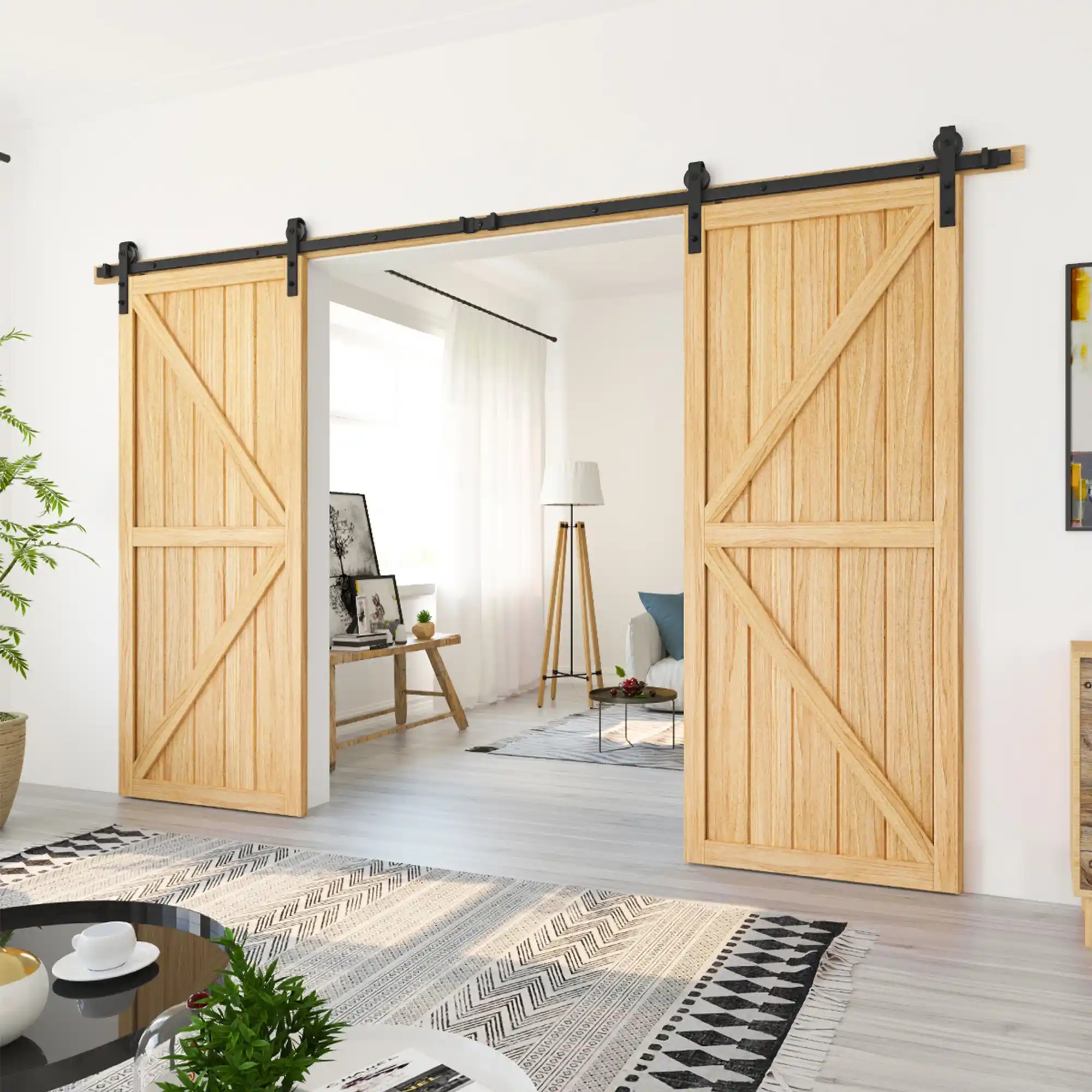
Getting the right hardware and track length is just as important as picking the right barn door size. If your track is too short or your wall can’t support the setup, your door won’t slide smoothly—or safely.
How Long Should the Track Be?
A good rule of thumb:
Your barn door track should be at least twice the width of your door.
Minimum Wall Space Needed
Make sure you have enough clear wall space next to your opening for the door to slide over. Here’s what to check:
Same width as the door, with a little buffer (about 1″–2″)
No switches, outlets, or shelves in the way
Smooth surface (no heavy trim, windows, or vents)
If your space is tight, consider a bypass barn door system or a double-door setup instead.
Structural Support Tips
Barn doors are heavy, especially solid wood ones. That’s why your wall needs to support the full weight of the door and hardware.
Mount your track to wall studs (not just drywall)
Use lag bolts or specialty anchors for secure installation
Consider a header board if your studs don’t line up with your door location
Installing it right the first time avoids sagging, damage, or even dangerous falls.
Custom and Non-Standard Sizes

Sometimes, standard barn door sizes just won’t cut it—especially if you’re working with unique openings or bold design ideas. That’s where custom and non-standard sizes come in.
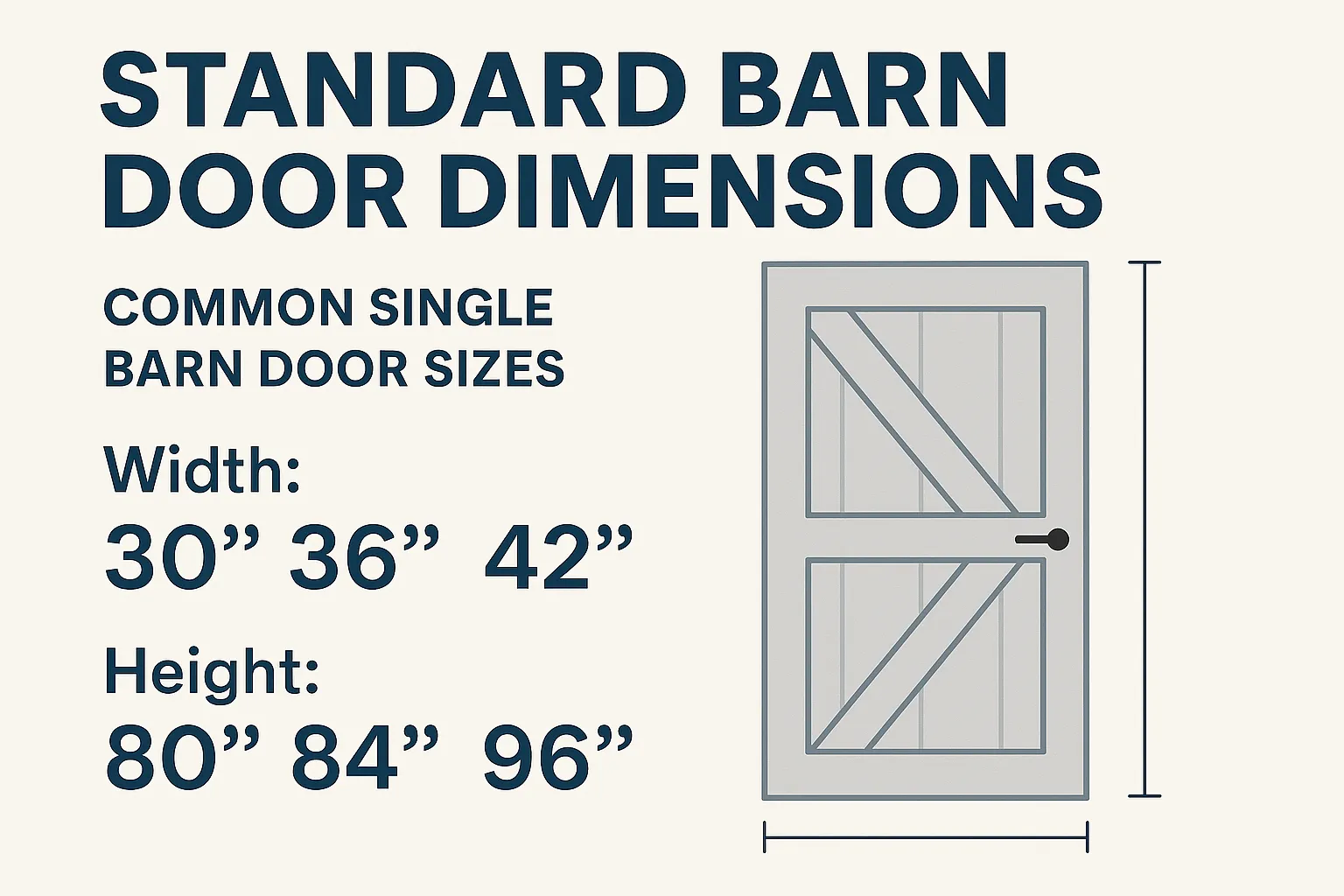
Custom Widths and Heights
Most manufacturers offer custom barn doors starting from:
Minimum width: 24″ (2 feet)
Maximum width: Up to 120″ (10 feet)
Height options: From 80″ to 108″ or even taller on request
So whether you’re covering a wide closet, a double opening, or creating a room divider, you’ve got flexible options.
Perfect for Unusual Openings
Custom barn doors are ideal when you’re dealing with:
Vaulted ceilings or tall walls
Extra-wide entryways
Converted garage doors or industrial lofts
Open-plan rooms needing separation
And if your doorway has an arched frame or uneven floors? A made-to-measure door ensures everything lines up perfectly for a smooth glide and snug fit.
Design Without Limits
Custom sizing also gives you creative freedom. Want a dramatic floor-to-ceiling look? Need two doors that meet in the middle? Want them in a bold color or glass panel style?
Tailoring your door size is the first step to bringing that vision to life—functionally and beautifully.
Special Configurations: Double, Bypass & Bi-Parting Doors
If you’re working with wider openings or want to make a design statement, special barn door configurations like double, bypass, or bi-parting styles can be the perfect solution.
Double Barn Doors(Paired)

Double barn doors are two matching panels that meet in the middle—ideal for large openings like dining rooms, master bathrooms, or closets.
Sizing tips:
Each door should be the same size, typically half the total opening width plus 2″ overlap on each side.
Example: For a 60″ opening, use two 32″ doors (60″ + 4″ overlap = 64″ total width, divided by 2).
Bypass Barn Doors

Bypass systems let two or more doors slide past each other on parallel tracks—great for tight spaces where wall clearance is limited.
Sizing rules:
Each panel should fully cover the opening width.
Allow for track width equal to the total width of all doors combined.
Make sure you have depth in the wall or mounting area for dual-track installation.
Bi-Parting Barn Doors

Bi-parting doors work like double barn doors but can be larger or differently styled panels that slide away from each other. They offer dramatic flair and are often used in open-concept living or room dividers.
Quick tip: Track length should be twice the width of one panel to allow full opening movement.
Common Sizing Pitfalls & Tips

Measuring for a barn door might seem simple—but small mistakes can lead to big headaches.
🚫 Mistake 1: Not Measuring in Multiple Spots
Walls and floors aren’t always perfectly level. If you only measure once, your door might not fit right.
Pro tip:
Measure width and height in three spots (top, middle, bottom). Use the largest number to size your door.
🚫 Mistake 2: Forgetting Track Clearance
Your barn door needs enough wall space to slide open fully. If there’s a light switch, vent, or window in the way, it could block movement.
Pro tip:
Make sure the track is at least 2× the door width, and there’s clear wall space for it to slide completely open.
🚫 Mistake 3: Ignoring Floor Height Changes
If you’re installing over tile, carpet, or transitioning between rooms, height differences can affect how your door hangs and clears the floor.
Pro tip:
Measure from the finished floor, not subfloor. Account for rugs or planned flooring changes.
🚫 Mistake 4: Installing the Rail Too Early
If you hang the rail before your door arrives, the height may not match up—especially if the door isn’t standard.
Pro tip:
Wait until the door is on-site before mounting the rail. This ensures you get the alignment just right.
Accessibility Considerations

If you’re planning a barn door for a space that needs to be wheelchair- or walker-friendly, sizing it right is more than just a preference—it’s essential.
ADA Compliance Basics
To meet ADA (Americans with Disabilities Act) guidelines, interior doorways should offer a clear opening of at least 32 inches when the door is fully open. That usually means choosing a barn door that’s at least 36 inches wide.
Overlap Still Counts
Because barn doors slide across the wall, the overlap area may block some of the opening. To maintain accessibility, make sure your final door width accounts for the overlap and still leaves a full 32-inch clear opening.
Design Tip
Pair wide barn doors with smooth floor transitions (no lips or thresholds) to make spaces truly barrier-free. Also, install easy-to-grip handles at an appropriate height (34–48 inches from the floor).
Ready to Size the Perfect Barn Door?

Whether you’re upgrading your home or outfitting a new space, getting the barn door size right makes all the difference. Need help choosing the right dimensions, track length, or custom options? Our experts are here to guide you.
Contact us today for personalized sizing advice, hardware recommendations, or a free quote on your ideal barn door setup.