
![Distorted building reflection on a glass curtain wall - The Ultimate Guide to Glass Wall Systems [March 2026] - APRO Distorted building reflection on a glass curtain wall](https://aprodoor.com/wp-content/uploads/2025/02/Distorted-building-reflection-on-a-glass-curtain-wall.webp)
The Ultimate Guide to Glass Wall Systems
Learn everything about glass wall systems — types, benefits, installation tips, performance specs, and design ideas to upgrade your space with light and style.
Material: High-quality aluminum and glass options
Glazing Options: Single, double, or triple glazing
Finish: Powder-coated or anodized frame finishes
Size: Customizable panel dimensions for various building designs
Weather Resistance: Engineered for superior air, water, and thermal performance
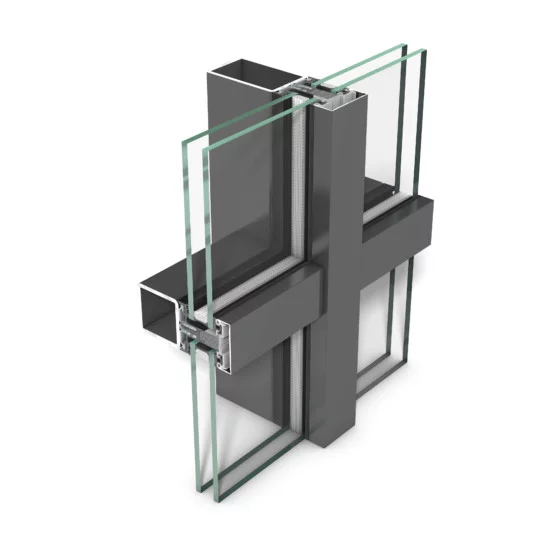
Our unitized curtain wall fittings offer reliable support, durability, and seamless integration for modern architectural designs.
Ensures structural stability while allowing smooth panel movement.
Reinforces the system to withstand wind loads and external pressure.
Secure and align curtain wall components for a precise installation.
Provide a firm grip and enhance the functionality of the system.
Measure, align, and mark positions for accurate installation.
Secure vertical supports to form the main framework.
Fix horizontal connectors to reinforce the structure.
Position glass securely within the framework.
Fasten glass panels tightly for stability.
Use gaskets and sealants to enhance weatherproofing.
Unitized curtain walls enhance modern architecture by combining aesthetics and functionality across various settings.
A unitized curtain wall is a prefabricated system where large glass and frame units are assembled and glazed in a factory before being transported to the construction site for quick installation. These walls efficiently transfer wind and gravity loads to the building structure at the floor line.
Traditional curtain walls (stick-built systems) require on-site assembly, while unitized systems come pre-assembled with framing and glass panels. Unitized curtain walls eliminate the need to install each component separately, making them the preferred choice for high-rise buildings due to faster and more precise installation.
Stick-built curtain walls allow installation to begin as soon as materials arrive on-site, as framing and glass are assembled during construction. Unitized curtain walls require more off-site planning since they are pre-fabricated before shipping but allow for quicker on-site installation.
Curtain walls are ideal for architecturally complex high-rises, offering superior insulation, advanced energy efficiency, and design flexibility. Window walls, on the other hand, are more common in residential and commercial buildings, providing a modern glass facade with an affordable, straightforward installation process.
Unitized curtain walls may struggle with certain misalignment issues since they require precise fabrication. They can become bulky in appearance when adjustments are needed. Additionally, end dams are required when terminating the curtain wall against another wall system to maintain proper drainage and weather resistance.
![Distorted building reflection on a glass curtain wall - The Ultimate Guide to Glass Wall Systems [March 2026] - APRO Distorted building reflection on a glass curtain wall](https://aprodoor.com/wp-content/uploads/2025/02/Distorted-building-reflection-on-a-glass-curtain-wall.webp)
Learn everything about glass wall systems — types, benefits, installation tips, performance specs, and design ideas to upgrade your space with light and style.

Compare curtain walls and storefronts in design, cost, performance, and durability. Learn which glazing system best suits your building needs.


Learn the key differences between window walls and curtain walls. Understand their construction, advantages, and when to choose each for your building.
WhatsApp us