










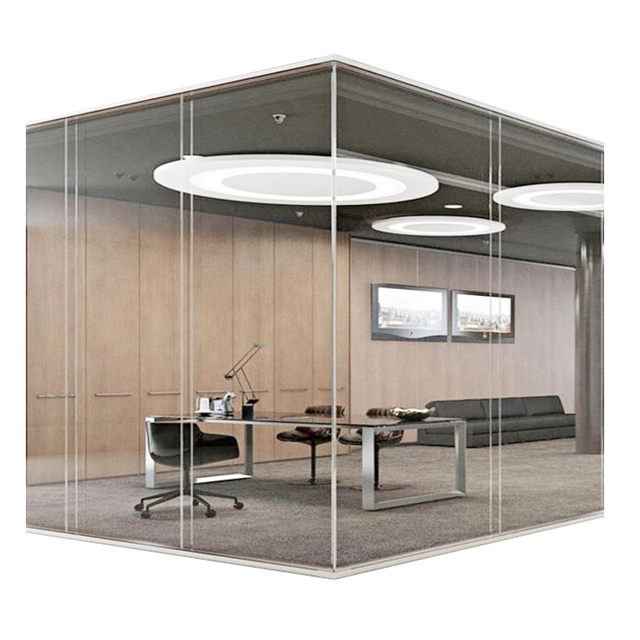
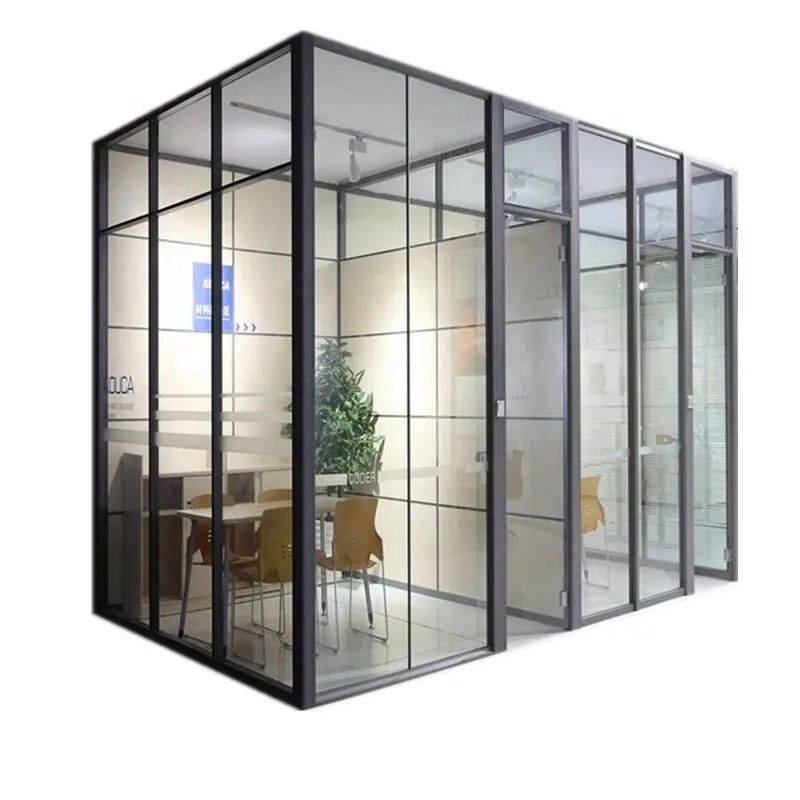


Introduction
Have you ever touched the inside of an aluminum window frame on a freezing winter morning and felt a chilling, ice-cold sensation? Or perhaps you have noticed water droplets pooling on your window sills, leading to frustrating mold growth?
If you are planning a home renovation or managing a commercial construction project, you have likely heard contractors recommend “thermal break” technology. But what exactly does this mean?
As an experienced aluminum window and door manufacturer, I have spent years on the factory floor and at construction sites observing how materials react to extreme weather. In this ultimate, comprehensive guide, we are going to dive incredibly deep into the world of fenestration.
We will explore the physics of heat transfer, the microscopic details of extrusion manufacturing, the rigorous international testing standards, and the real-world impact of choosing the right window system.
Whether you are an architect, a builder, or a homeowner, this guide will provide you with the exact knowledge you need.
What Is a Thermal Break in Aluminum Windows?
A thermal break is a continuous barrier made of a non-conductive material (usually polyamide PA66) positioned between the interior and exterior aluminum profiles of a window frame. Its primary function is to prevent the transfer of heat or cold through the highly conductive metal, significantly improving the window’s insulation, reducing condensation, and saving energy.
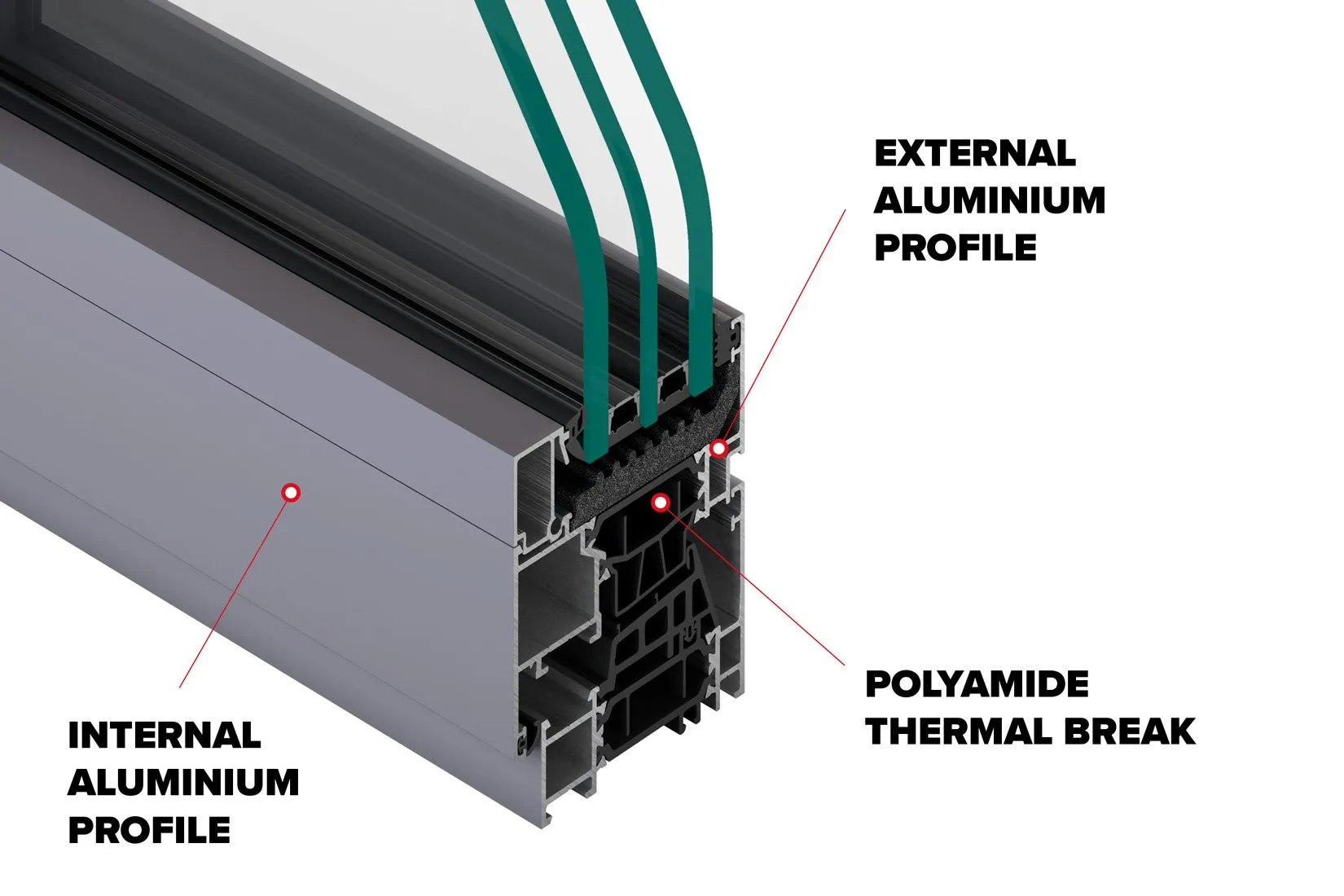
Aluminum is an incredibly strong, durable, and lightweight material, making it ideal for large architectural windows. However, aluminum is also an excellent conductor of heat. Without a window thermal barrier, the cold outside air easily travels through the frame into your warm living room. By inserting this non-conductive plastic-like strip, we literally “break” the thermal bridge.
Why is it used in aluminum alloy windows?
The use of a thermal break in windows is not just a luxury; in modern architecture, it is an absolute necessity. Aluminum alloy windows without this technology are practically obsolete in climates that experience significant temperature fluctuations. We use this technology because it transforms aluminum from a poor insulator into a highly energy-efficient structural framing material.
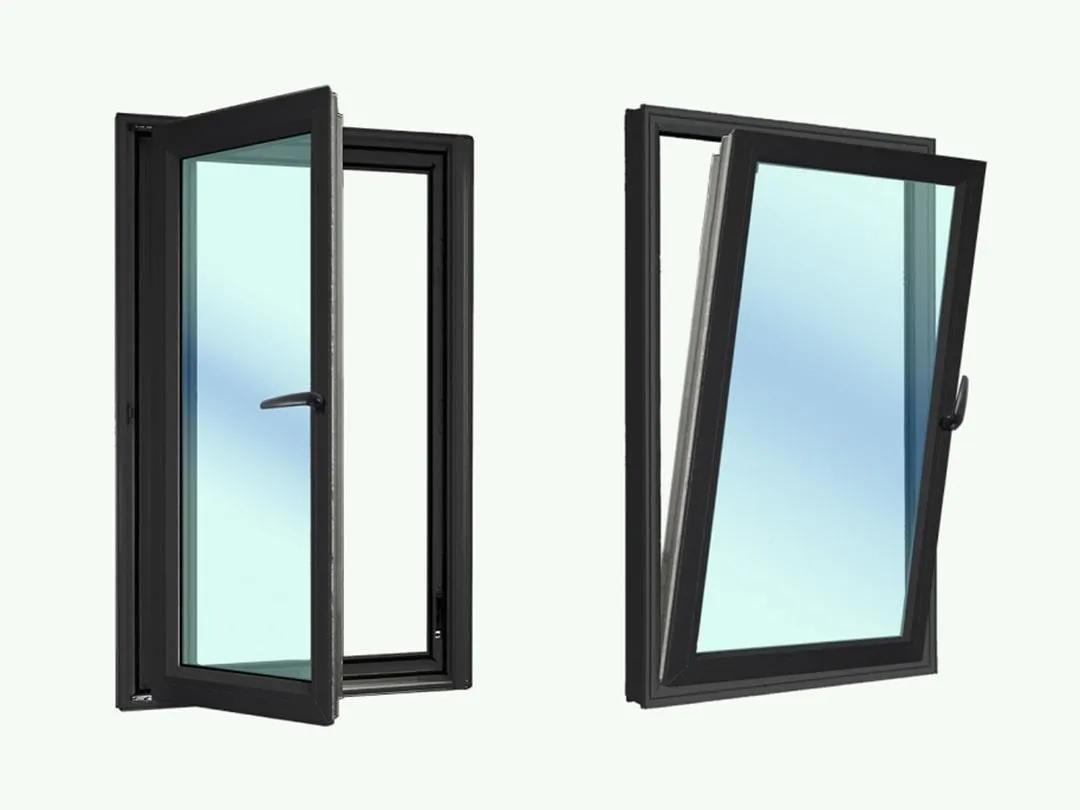
Before this innovation, homeowners had to choose between the structural integrity of aluminum and the insulating properties of wood or vinyl. Wood rots and requires immense maintenance; vinyl (uPVC) can warp under extreme heat and lacks the strength to hold massive panes of glass. By introducing thermal break insulation into the extrusion process, we combined the best of both worlds: the unbreakable strength of aluminum and the superior energy efficiency of non-conductive materials. This is why almost all premium architectural projects mandate aluminum window thermal break systems.
How Does a Thermal Break Window Work?
Understanding how a thermal break window works requires a brief dive into the laws of thermodynamics. Heat naturally flows from a warmer area to a cooler area. This transfer happens in three ways: conduction (through solid materials), convection (through air or liquid), and radiation (through electromagnetic waves).
Standard aluminum frames suffer massively from conduction. If it is 0°C outside and 22°C inside, the aluminum frame acts as a highway, pulling the heat from your room and dumping it outside.
How does a thermal break separate indoor and outdoor heat transfer?
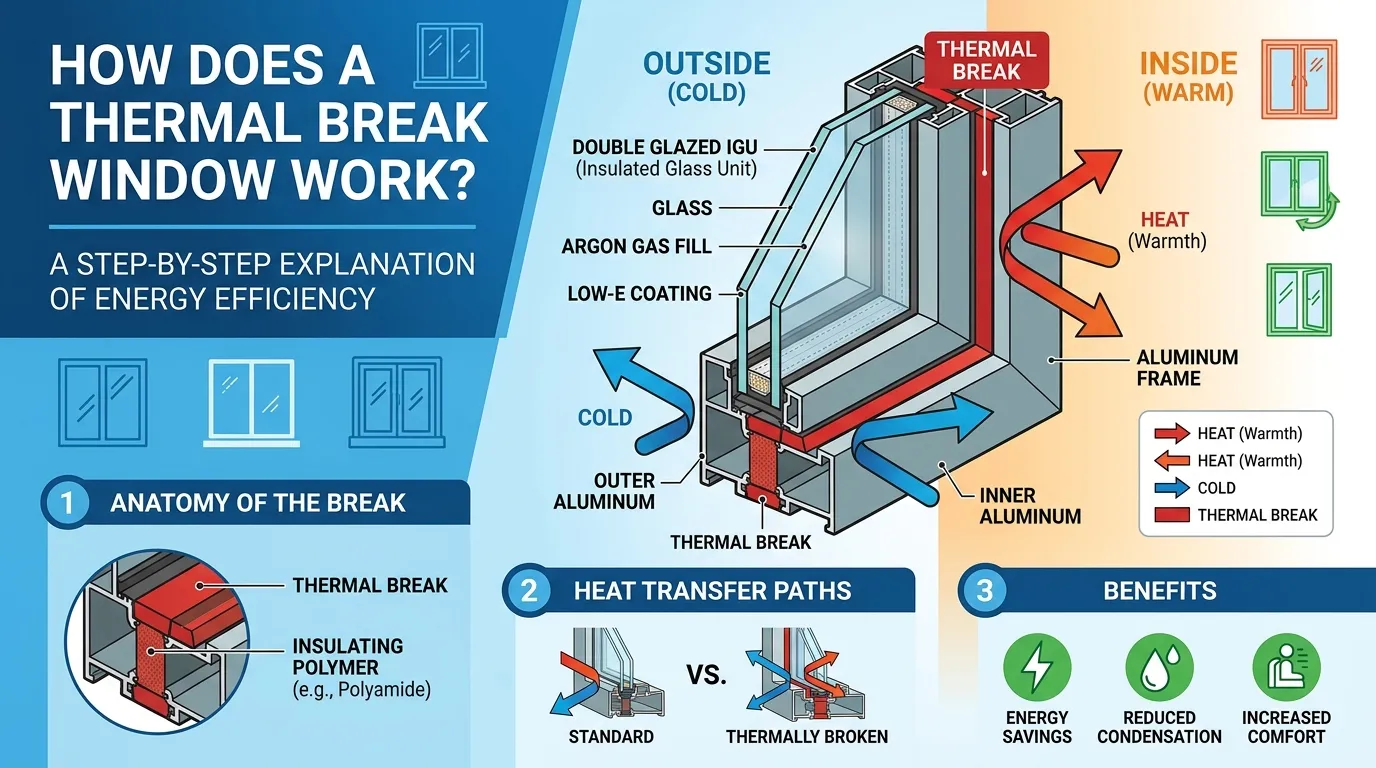
The window thermal break operates by physically interrupting the conduction highway. The polyamide strip (which we will discuss in detail later) has a thermal conductivity that is roughly 500 to 1000 times lower than that of aluminum. When heat from the inside of your home travels through the inner aluminum profile, it hits this polyamide barrier. Because the barrier cannot conduct heat efficiently, the heat stops there. It is trapped inside.
Conversely, the freezing cold from the outside travels through the exterior aluminum frame but is blocked by the same barrier, preventing the interior frame from becoming cold. This complete separation is the magic behind the technology.
Factory Experience & Problem-Solving Case Study #1:
As an aluminum window and door manufacturer, we see the difference between standard aluminum frames and thermal break systems long before the products reach the jobsite. In daily production and quality control, it is clear that a non-thermal break frame transfers temperature much more easily, while a well-made thermal break profile creates a more effective separation between the interior and exterior sides of the frame. That is why, in our factory, we pay close attention not only to the aluminum profile itself, but also to the thermal break strip, rolling precision, corner assembly, and sealing details.
To give you an immersive look at our factory floor, let me detail a specific manufacturing challenge we faced last year. We were producing a massive batch of custom thermal break windows for a high-altitude resort. During our routine quality control in our in-house thermal testing chamber, we discovered an anomaly: the interior frames of a specific batch were showing a temperature drop of 3°C lower than our acceptable baseline.
What did we do? I immediately halted the production line. We pulled the failing profiles and examined them under magnification.
What was the problem? We found that the rolling precision—the machine process that crimps the aluminum tightly around the polyamide strip—was off by just 0.15 millimeters on the left roller. This microscopic gap allowed tiny amounts of air to bypass the thermal strip, creating a micro-convection loop that compromised the thermal break insulation.
How did we solve it? Our head engineer and I initiated a strict step-by-step recalibration of the rolling machine:
- Depressurization: We released the hydraulic pressure on the crimping discs.
- Laser Alignment: We used a laser calibration tool to realign the crimping heads to a tolerance of 0.01mm.
- Knurling Adjustment: We deepened the knurling teeth (the ridges cut into the aluminum to grip the strip) to ensure a more aggressive, airtight bite.
- Shear Testing: We ran a new sample and subjected it to a shear test, ensuring it could withstand over 400 Newtons of lateral force per millimeter.
- Thermal Verification: The new samples were placed back into the thermal chamber at -20°C. The interior frame maintained a perfect 20°C.
This level of manufacturing detail is why true thermal break windows perform so exceptionally. It is not just about putting a piece of plastic between metal; it is about engineering an airtight, structurally sound composite profile.
What Is the Structure of a Thermal Break Aluminum Window?
To truly appreciate what is a thermal break, you need to dissect the window. A high-performance aluminum window thermal break system is a complex assembly of several precision-engineered components.
Outer aluminum frame
The outer aluminum frame is the first line of defense against the elements. Typically extruded from 6063-T5 or T6 architectural grade aluminum alloy, this section is designed purely for weather resistance, structural wind load capacity, and exterior aesthetics. It is subjected to rigorous surface treatments—usually AAMA 2604 or 2605 certified powder coating or PVDF fluorocarbon paint. This ensures that the exterior withstands UV radiation, acid rain, and salt spray without fading or chalking. Because it sits completely on the outside of the thermal barrier, this part of the frame will match the extreme temperatures of the outdoor environment.
Inner aluminum frame
The inner aluminum frame is the interior-facing section of the window. Because the window thermal break completely insulates it from the outside world, this profile maintains the ambient temperature of your room. This separation allows for an incredible design feature known as “dual-color” or “bicolor” profiles. Since the inner and outer frames are extruded separately and then joined by the thermal strip, you can customize the finishes independently. You could have a dark charcoal grey powder coat on the outside to match your modern facade, and a warm wood-grain sublimation finish on the inside to match your hardwood floors.
Polyamide thermal barrier strip
This is the heart of the system. While some cheaper systems use polyurethane (PU) resin poured into a channel, the global gold standard is the polyamide strip, specifically PA66 GF25 (Polyamide 66 reinforced with 25% glass fiber).
Why glass-fiber reinforced nylon? Because its coefficient of thermal expansion is almost exactly identical to that of aluminum. When the window is exposed to the blazing summer sun, the aluminum expands. When winter hits, it contracts. If the thermal break material expanded at a different rate, the window frame would warp, shear, or snap over time. PA66 GF25 moves perfectly in sync with the aluminum, ensuring structural integrity for decades.
Glass, seals, and hardware system
A thermal break frame is useless if the rest of the window fails. The structure is completed by thermal glass windows—usually double or triple-glazed insulated glass units (IGUs) filled with Argon gas and coated with Low-E (Low-Emissivity) metallic layers. Furthermore, the system utilizes automotive-grade EPDM (Ethylene Propylene Diene Monomer) rubber gaskets. There are typically three layers of sealing: a primary outer seal, a central acoustic/thermal seal, and an inner weather seal. Finally, multi-point locking hardware pulls the sash tightly against these seals, creating a vault-like closure. For more insights on how these components affect pricing, you can read our comprehensive [Aluminum Window Pricing Guide].
What Are the Main Benefits of Thermal Break Aluminum Windows?
Investing in thermal break windows is a significant decision. Understanding the tangible, day-to-day benefits will clarify why architects and homeowners prioritize this technology.
Better thermal insulation
The most obvious benefit is the massive reduction in U-value (the measurement of heat transfer). A standard non-thermally broken aluminum frame might have a U-value of around 5.0 W/m²K. By integrating a high-quality thermal break insulation system, that frame’s U-value can drop down to 1.5 W/m²K or lower. This means the frame allows only a fraction of the heat to escape, keeping your home incredibly warm during blizzards and refreshingly cool during heatwaves.
To back this up, we look to industry data. According to the data standards set by the National Fenestration Rating Council (NFRC), upgrading to thermally broken frames combined with Low-E glass can improve a whole-window insulation performance rating by up to 50% compared to traditional metal frames. This is a staggering improvement in building envelope efficiency.
Reduced condensation risk
Condensation is not just a nuisance; it is a structural danger. When warm, moist indoor air comes into contact with a freezing cold standard aluminum frame, the air cools rapidly, and the moisture turns into liquid water. This water drips onto sills, ruining drywall, peeling paint, and providing a perfect breeding ground for toxic black mold.
Thermal break windows eliminate this risk entirely. Because the interior frame is kept warm by the thermal barrier, it never reaches the “dew point” temperature required for condensation to form. Your frames stay bone-dry, protecting your family’s respiratory health and your home’s structural integrity.
Improved indoor comfort in hot and cold climates
Comfort is about more than just the thermostat setting; it is about radiant temperature. If you sit near a standard cold window in winter, your body radiates its own heat toward the cold glass and metal, making you feel chilly even if the room air is 22°C. Thermal break in windows ensures that the interior frame surface temperature remains very close to the ambient room temperature. You can sit right next to a massive floor-to-ceiling aluminum window during a snowstorm and feel absolutely no cold draft or radiant heat loss.
Better sound insulation performance
A highly overlooked benefit of the polyamide thermal strip is its acoustic dampening properties. Sound travels via vibrations through solid materials. Aluminum is dense and rings like a bell when struck by sound waves (like traffic noise or airplanes). The non-metallic PA66 thermal break acts as a shock absorber. It disrupts the vibrational frequency of the sound waves, preventing them from traveling from the outer frame to the inner frame. When paired with acoustic laminated thermal glass windows, the sound reduction is profound, creating a sanctuary-like quiet interior.
Lower energy bills over time
Because your HVAC (Heating, Ventilation, and Air Conditioning) system does not have to fight a constant battle against heat loss or heat gain through conductive window frames, it runs significantly less often. Over the lifespan of a home, the reduction in electricity and gas usage directly translates to thousands of dollars in savings, ultimately paying for the premium cost of the window thermal break upgrade.
Thermal Break vs Non-Thermal Break Aluminum Windows: What’s the Difference?
To make the comparison crystal clear, let us look at a detailed breakdown.
| Comparison Metric | Thermal Break Aluminum Windows | Non-Thermal Break (Standard) Aluminum |
|---|---|---|
| Structure | Contains a PA66 polyamide barrier | Solid, continuous piece of extruded aluminum |
| Thermal Insulation (U-Value) | Excellent (Low heat transfer) | Very Poor (High heat transfer) |
| Condensation Risk | Extremely Low (Frames stay warm and dry) | Very High (Frames freeze and sweat in winter) |
| Color Options | Dual-color available (Inside vs Outside) | Single color only (Same inside and out) |
| Acoustic Insulation | High (Barrier dampens sound vibrations) | Low (Solid metal transfers sound easily) |
| Initial Cost | Higher premium investment | Lower upfront cost |
| Energy Bill Savings | Significant over the long term | None (Causes energy loss) |
Which one has better insulation performance?
Thermal break windows unequivocally offer superior insulation. They are engineered specifically to stop thermal bridging, making them the only viable choice for energy-conscious building designs like Passive House or LEED-certified projects.
Which one is more suitable for residential buildings?
For residential buildings where comfort, health (mold prevention), and energy bills are paramount, thermal break in windows is the mandatory choice. Standard aluminum is entirely unsuitable for modern residential living spaces, except perhaps for unheated detached garages or garden sheds.
Which one costs less upfront?
Non-thermal break windows are significantly cheaper upfront. They require less raw material (no polyamide strips), less manufacturing time, and do not require the expensive knurling and rolling machinery used in our factories. However, this upfront saving is a false economy.
Which one offers better long-term value?
Thermal break windows provide exponentially better long-term value. The savings on energy bills, the prevention of water damage from condensation, and the increased property resale value far outweigh the initial premium.
In Which Climates Are Thermal Break Aluminum Windows Most Commonly Used?
A common misconception is that thermal break insulation is only for freezing climates like Canada or Northern Europe. While they are absolutely critical there to prevent freezing frames and heat loss, they are equally vital in scorching hot climates like the Middle East, Arizona, or Australia.
In a hot climate, the sun bakes the exterior aluminum frame to blistering temperatures. Without a thermal break, that heat radiates directly into the air-conditioned living space, forcing the AC unit to work overtime.
The thermal barrier blocks the heat from entering just as effectively as it blocks the cold. Therefore, thermal break windows are essential in any climate that requires indoor heating or air conditioning to maintain comfort.
What Factors Affect the Performance of Thermal Break Aluminum Windows?
Not all thermal break systems are created equal. The overall performance relies on a symphony of engineering variables.
Thermal break strip width
The width of the polyamide strip is a primary driver of insulation value. Standard strips are often 14.8mm wide. However, for extreme climates or ultra-high-efficiency homes, manufacturers use strips that are 20mm, 24mm, 35.3mm, or even wider. The wider the thermal break insulation gap, the harder it is for heat to bridge the distance.
Frame design and chamber structure
Modern frames are designed with multiple hollow chambers inside the aluminum. These chambers trap stagnant air, which acts as an additional layer of insulation. Some ultra-premium systems even inject insulating foam into these cavities to push the U-value down even further.
Double glazing or triple glazing
The frame is only about 15-20% of the window’s total area; the glass is the rest. A premium aluminum window thermal break frame must be paired with high-performance glazing. Double glazing with Argon gas and Low-E coating is the standard. For extreme performance, triple glazing offers an extra pane of glass and an extra gas-filled cavity, massively upgrading thermal and acoustic retention.
Sealing system and installation quality
This is arguably the most critical factor. Even the most perfectly engineered thermal break window will fail if it is not sealed and installed correctly.
Factory & Field Experience Case Study #2:
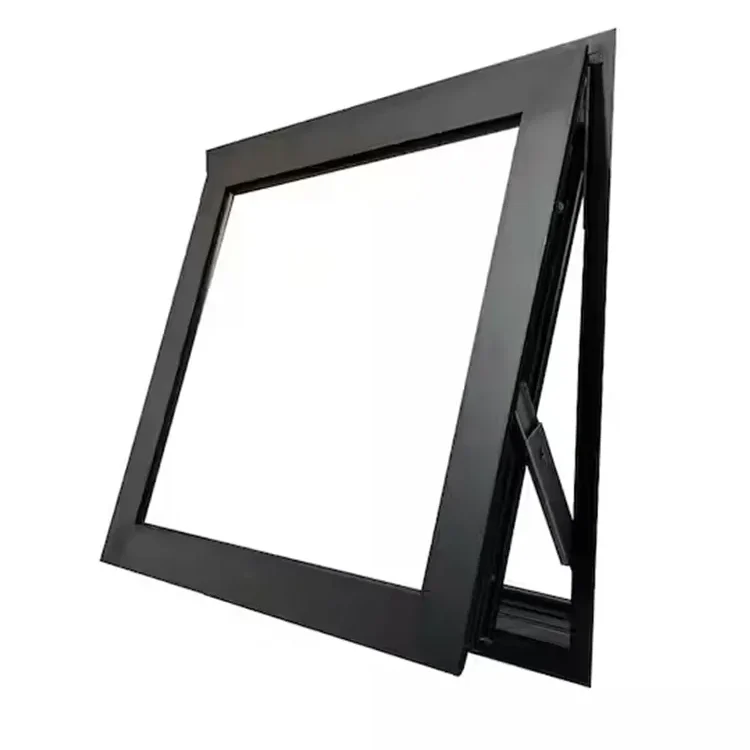
Because our company not only manufactures aluminum windows and doors but also supports project installation, in projects like Grey House we focus not only on product quality in the factory, but also on how the full system performs after on-site delivery and installation. Located in North York, Canada, the Grey House project used our aluminum handrails, A200T sliding doors, A80T fixed windows, and A80T awning windows, with a clear focus on modern aesthetics, durability, energy efficiency, and everyday comfort.
From the installation and project delivery side, we pay close attention to how the door and window systems align with the building façade, opening dimensions, and finishing details on site, because luxury residential projects like Grey House demand both visual consistency and reliable long-term performance. The project highlights sound insulation, Low-E glass thermal performance, corrosion-resistant durability, and enhanced security, so during installation, correct frame alignment, sealing treatment, and coordination between hardware and glazing become especially important.
From our experience with projects like this, the value of a high-performance aluminum system is not only in the product specification itself, but in the final installed result. Grey House is a good example of how aesthetics, comfort, energy performance, and durability all depend on the full system working together — from product design and glazing configuration to sealing quality and on-site installation execution.
To give you an immersive detail of the Grey House project: When we arrived on site in freezing November weather, we encountered a severe issue. The concrete rough openings poured by the general contractor were uneven, deviating by up to 15mm in the top right corners.
What did we do? If we had just screwed the frames in and caulked the massive gap, the thermal break would have been bypassed by the cold air leaking through the wall cavity.
How did we solve it?
- Laser Leveling: We used 3D laser levels to establish a perfect plumb and square baseline inside the skewed concrete opening.
- Thermal Shimming: Instead of standard wood shims which can rot and conduct cold, we utilized high-density polyurethane thermal shims to pack out the 15mm gap, ensuring the window was perfectly level.
- Expanding Foam Application: We meticulously applied a specific closed-cell, low-expansion acoustic thermal foam around the entire perimeter. We injected it deep into the cavity to bridge the gap between the concrete and the window’s thermal break strip.
- Membrane Sealing: Finally, we applied a highly elastic, vapor-permeable flashing tape over the foam, connecting the aluminum frame directly to the building’s weather barrier.
By taking these rigorous, step-by-step installation measures, we ensured that the thermal break in windows operated exactly as it did in our factory testing chamber, resulting in zero drafts and perfect comfort for the homeowners despite the bitter Canadian winter.
How to Choose High-Quality Thermal Break Aluminum Windows
The market is flooded with products claiming to be high-performance. How do you separate the premium engineering from the cheap imitations?
Customer Communication Experience:
In conversations with customers, we often find that many buyers first look at price or frame size, but do not immediately understand how much the frame structure affects energy performance. Once we explain the difference between standard aluminum and thermal break construction, especially how the insulated barrier reduces heat transfer through the frame, the value becomes much easier to understand. From our experience helping customers compare options, thermal break windows are usually the more suitable choice for projects that prioritize comfort, condensation control, and long-term energy efficiency.
When I sit down with a client, I guide them through a specific evaluation process. Here is how you can perform this evaluation yourself:
Check the thermal break material
Ask the supplier explicitly: “Is the thermal break made of PA66 GF25?” If they hesitate, or if they say it is PVC or ABS plastic, walk away. PVC becomes brittle in the cold and soft in the heat; it will eventually crack and compromise the window’s integrity. Look closely at the strip; genuine PA66 often has the brand name (like Technoform) laser-etched directly onto the strip.
Review glazing specifications
Do not accept standard clear glass. Demand to see the specifications for the insulated glass unit. You want to see “Argon Gas Filled” and “Low-E Coating” (such as double silver or triple silver Low-E). Furthermore, ask for “Warm Edge Spacers.” The spacer is the perimeter bar separating the panes of glass. If it is made of highly conductive aluminum, you will still get condensation at the edges of the glass. Warm edge spacers are made of composite materials that block heat transfer.
Ask about Uw value or thermal performance data
A reputable manufacturer should be able to provide documented test reports. You are looking for the Uw-value (the U-value of the entire Window, including frame and glass). For highly efficient homes, you want a Uw-value of 1.5 W/m²K or lower. If a supplier cannot provide a certified U-value report, they are likely selling an inferior product.
Evaluate hardware, seals, and manufacturing quality
Open and close the showroom sample. Does the hardware operate smoothly with a satisfying, heavy click? Look at the black rubber seals (gaskets) in the corners. In cheap windows, the rubber is just cut and pushed together, leaving a microscopic gap where air and water can leak. In high-quality thermal break windows, the EPDM gaskets are continuously vulcanized around the corners, ensuring a seamless, watertight barrier.
Confirm testing and certification standards
Quality is proven through international testing. When evaluating a product, look for compliance with recognized engineering standards. For instance, the AAMA 505 standard (from the Fenestration and Glazing Industry Alliance) specifically dictates the dry shrinkage performance of thermal breaks, ensuring the polyamide strip does not shrink away from the aluminum over time. Similarly, in Europe, products must comply with the EN 14024 standard, which strictly regulates the mechanical performance and shear strength of metal profiles equipped with a thermal barrier. A manufacturer that builds to these standards is providing a world-class product.
Conclusion: Is a Thermal Break Important in Aluminum Alloy Windows?
To summarize briefly: Yes, it is arguably the single most important advancement in metal window fenestration history. The difference it makes to a building’s comfort, longevity, and carbon footprint is astronomical.
To grasp the true scale of this importance, we can look at one of the most famous architectural retrofits in history. During the massive energy retrofit of the Empire State Building in New York, all 6,514 windows were upgraded. By implementing advanced thermal barriers and insulating glass technologies, the building reduced its energy consumption by millions of dollars annually. While the Empire State Building used complex retrofitting on existing frames, the underlying physics are identical: stopping thermal transfer at the window envelope is the key to massive energy efficiency. You can read more about the general physics of this on the Wikipedia page for Thermal breaks.
Who should choose thermal break windows?
- Homeowners building new houses: If you are building from scratch, compromising on window frames is a catastrophic mistake. Thermal break systems should be your baseline.
- Renovators replacing old windows: If you are tired of drafts, high energy bills, and moldy sills, this upgrade will dramatically transform your living experience.
- Commercial architects: For office buildings, maximizing natural light with large aluminum spans while meeting strict energy codes is only possible with window thermal break technology.
When are non-thermal break windows still acceptable?
The use cases are very narrow. They are acceptable for interior office partitions, unheated warehouses, agricultural sheds, or enclosed patio rooms that do not require climate control. If the space does not have heating or air conditioning, a thermal break is unnecessary.
Final buying recommendation
Do your research. Ask the hard questions about PA66 strips, U-values, and glass specifications. Remember that windows are a 30-to-50-year investment. Paying a 20% premium today for high-quality thermal break windows will pay you back tenfold in energy savings, maintenance reduction, and daily comfort.
Frequently Asked Questions About Thermal Break Aluminum Windows
To round off this ultimate guide, let us address some of the most common questions we hear from clients and builders.
Is thermal break the same as double glazing?
No, they are different technologies that work together. “Double glazing” (or thermal glass windows) refers to the glass pane—having two sheets of glass with an insulating gas space between them. “Thermal break” refers specifically to the aluminum frame holding that glass. To have a truly energy-efficient window, you absolutely need both. Putting double glazing into a non-thermally broken frame is like wearing a thick winter coat but walking barefoot in the snow; the heat will just escape through the frame instead of the glass.
Do all aluminum windows have thermal breaks?
No. Many budget-friendly or older aluminum windows are extruded as a single, solid piece of metal. These are non-thermally broken and are notorious for terrible energy performance. In many regions today, strict building codes have effectively banned non-thermally broken aluminum windows for residential construction, but they are still manufactured and sold, so you must explicitly verify what you are buying.
Are thermal break windows better for hot climates or cold climates?
They are equally crucial for both. In a freezing climate, the thermal barrier stops the expensive indoor heat from escaping outside and prevents the frame from freezing and forming condensation. In a blistering hot climate, the thermal barrier stops the intense solar heat radiating through the exterior frame from penetrating the air-conditioned interior, vastly reducing cooling costs. It is an all-weather shield.
Can thermal break aluminum windows reduce outside noise?
Yes, significantly. While sound insulation is heavily reliant on the thickness and lamination of the glass, the frame plays a vital role. A solid aluminum frame easily transmits sound vibrations. The polyamide thermal break in windows acts as an acoustic decoupler. Because the inner and outer aluminum frames do not touch, the sound waves are disrupted and dampened as they hit the plastic-like barrier, resulting in a noticeably quieter indoor environment.
How can I tell whether a window is truly thermal break?
If you are looking at a cross-section sample in a showroom, it is easy: look for the distinct black (or sometimes grey) strip separating the inner and outer metal sections. If you are looking at a fully installed window, it is harder because the strip is hidden inside the frame. However, you can often run your hand along the inside frame on a very cold or very hot day. If it is a true thermal break window, the inner frame will feel very close to the indoor room temperature. If it is freezing cold or baking hot to the touch, it is likely a standard aluminum frame. Additionally, you can open the window sash and inspect the inner track; you can usually see the polyamide strip running along the inside of the extrusion.