













🏗️ Commercial Construction: Window & Door Submittals
If you are managing a commercial construction project, you already know that getting your window and door submittal package approved is one of the most critical hurdles you will face. A delayed approval means delayed fabrication, which ultimately pushes back the entire building enclosure schedule. In the high-stakes world of architectural glazing and facade engineering, missing a single NFRC certificate or anchor detail in your documents can cost thousands of dollars in delays.
⚠️ Pro-Tip: Avoid the “Revise and Resubmit” Stamp
In this comprehensive guide, we will break down exactly what needs to go into your fenestration submittal documents, how to structure them for immediate architect approval, and how to avoid the common pitfalls. Whether you are a general contractor, a glazing subcontractor, or an architect reviewing the files, this guide covers every semantic detail of the construction material approval process.
📌 Submittal Documentation Checklist
To ensure a smooth approval process, your package must include technical data, performance certifications, and shop drawings. Below is a reference table for standard requirements:
| Document Type | Key Components | Priority Level |
|---|---|---|
| Shop Drawings | Elevation details, anchor points | Critical |
| Product Data | Manufacturer specs, finish samples | High |
| Certifications | NFRC, U-values, SHGC ratings | Standard |
| Structural Calcs | Wind load analysis, deflection | Mandatory |
| Warranty Info | 10-year glass, 20-year finish | Supportive |
💡 Final Review Checklist
Before sending your files to the architect, verify that all hardware sets are coordinated with the security consultant and that the glass thickness matches the structural engineer’s requirements. Efficiency at this stage saves weeks of field delays.
🏢 What is a Window and Door Submittal Package?
⭐ Core Definition
A window and door submittal package is a comprehensive collection of technical documents, shop drawings, test reports, and material samples provided by the glazing contractor to the architect and general contractor. It proves that the proposed fenestration products meet the exact design, structural, and energy requirements specified in the project contract.
This package serves as the critical bridge between architectural design intent and actual manufacturing. Without an approved submittal, no fabrication can begin.
Keeping this package organized between 40 to 60 pages of highly detailed technical specifications is often the industry standard for medium-sized commercial projects.
🛡️ Why is the Fenestration Submittal Process Critical?
Before diving into the exact documents you need, it is crucial to understand the multidimensional purpose of these architectural glazing submittals. They are not just bureaucratic paperwork; they are your ultimate liability protection.
For Project Approval and Material Verification: It ensures the architect that the thermal break aluminum window data aligns exactly with their energy models.
For Installation Coordination: It provides the exact window installation method statement for site workers, ensuring waterproofing and structural integrity.
For Project Closeout and Handover: It forms the basis of the fenestration closeout documents, providing the building owner with maintenance manuals and warranties.
For Financial Flow: In most commercial projects, you cannot bill for stored materials or mobilization until the submittal is 100% approved.
📖 Our experience:
I remember one villa project we handled in 2023, when we were submitting the approval package for the aluminum windows and doors before production. It was not a large commercial tower project, just a private custom villa, but the review was Surprisingly strict because the owner’s consultant checked every detail very carefully.
At that time, we had already prepared the main submittal documents, including shop drawings, glass specifications, hardware information, profile sections, and finish details. We thought the package was complete. But during the review, the consultant came back with a comment on one small but important point: the submittal did not clearly show the isolation treatment between the aluminum frames and the steel connection parts at the installation points.
⚠️ The Core Issue
The issue was that some of the window openings used steel brackets as part of the fixing structure. If the aluminum frame was installed in direct contact with the steel parts, there was a long-term risk of galvanic corrosion, especially in an outdoor environment exposed to rain and humidity. The consultant would not approve the submittal without a clear detail showing how that contact would be separated and protected.
To solve it, we immediately went back to our engineering team and checked all of the connection nodes again. We revised the installation details, added the missing section drawings, and clearly marked the use of isolation pads, anti-corrosion treatment, and sealant between the dissimilar materials. We also added the related material data sheets so the consultant could see exactly what would be used on site. After the revised package was resubmitted, the consultant approved it, and the project moved into production without further delay.
💡 Key Takeaway
That project taught me a very practical lesson: for window and door submittals, the problem is usually not the main drawings or the glass specs. More often, it is one small connection detail that decides whether the package gets approved or sent back.
📦 The Core Components: What an Approved Package Must Contain
To achieve a “Approved as Noted” or “Approved” status on your first try, your document must be rigorously organized. Here is a comprehensive breakdown of the essential components.
📋 1. Project Basics and Manufacturer Qualifications
The foundation of your package establishes who is doing the work and where it is being applied. This section sets a professional tone.
Project Identification: Clearly state the project name, address, phase, and the specific building blocks involved.
Stakeholder Information: List the Developer/Owner, General Contractor, Architect of Record, and the Glazing Subcontractor.
Window Schedule for Construction: This is a crucial matrix. It must list every single window type, quantity, location (room number/elevation), and dimensions.
Corporate Certifications: Include the manufacturer’s business licenses, ISO 9001 quality management certificates, and authorized dealer letters if the installer is a third-party entity.
📐 2. Window Shop Drawings and Architectural Glazing Submittals
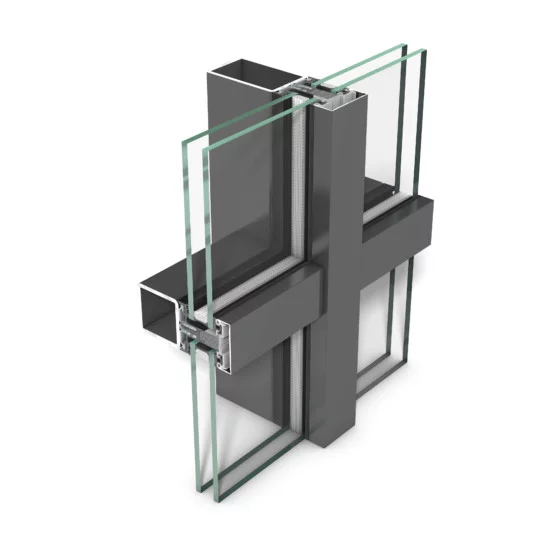
This is the absolute heart of your window and door submittal package. Shop drawings are not architectural drawings; they are highly detailed engineering blueprints showing exactly how the product will be built and attached to the building.
Elevations and Floor Plans: Showing the exact locations of the storefront shop drawings or operable windows.
Section Details: Vertical and horizontal cross-sections at a minimum scale of 1:2 or half-size. These must show the frame profiles, thermal breaks, and glazing beads.
Anchor and Embed Details: How is the window fixing to the concrete or steel? You must show the fastener type, spacing, edge distance, and embedment depth.
Water Management: Detailed weep hole locations, flashing details, and perimeter sealant joints (both primary and secondary seals).
Hardware and Operation: Visual diagrams showing hinge locations, handle heights (vital for ADA compliance in the US), and the swing direction of commercial doors.
🔬 3. Product Technical Data and Glazing Hardware Specifications
Architects need to know the exact physical makeup of the materials arriving on site. General “marketing brochures” will get your submittal rejected immediately. You need cut sheets.
Extrusion Profiles: Detailed data on the aluminum alloy (e.g., 6063-T5 or T6), the wall thickness, and the finishing process (e.g., Anodized, PVDF, or Powder Coat conforming to AAMA 2604/2605).
Glass Makeup: The exact composition of the Insulated Glass Unit (IGU). For example: 6mm Low-E tempered outer pane + 12mm Argon gas space with warm edge spacer + 6mm clear tempered inner pane.
Thermal Break Aluminum Window Data: Specifications on the polyamide (PA66) thermal struts. What is the width of the thermal break? How does it handle shear testing?
Glazing Hardware Specifications: Cut sheets for every friction stay, multipoint locking mechanism, handle, and door closer. Include the cycle-testing data for these moving parts.
Sealants and Gaskets: Technical data sheets for the EPDM weather stripping and the structural silicone used in the glazing process.
📜 4. Commercial Window Test Reports and Certifications
You can claim your window is hurricane-proof and energy-efficient, but without third-party lab testing, those claims mean nothing. This section proves compliance with local building codes.
Structural Performance: AAMA test reports showing the window’s resistance to uniform wind load (Design Pressure or DP rating).
Air and Water Infiltration: Results from ASTM E283 (Air Leakage) and ASTM E331 (Water Penetration). This proves the window won’t leak during a storm.
NFRC Energy Performance Certificates: The National Fenestration Rating Council (NFRC) label data showing the U-Factor, Solar Heat Gain Coefficient (SHGC), and Visible Transmittance (VT).
Acoustic Data: If the project is near an airport or highway, you must include OITC or STC sound insulation test reports.
Fire Ratings: For specific commercial door warranty documents, fire-rated assemblies require Underwriters Laboratories (UL) or equivalent certification documents.
🛠️ 5. Window Installation Method Statement
Even the best window will fail if installed incorrectly. The window installation method statement tells the General Contractor exactly how the product goes into the rough opening.
Pre-installation Checklist: How to verify the rough opening dimensions, plumb, level, and squareness before starting.
Material Handling: Safe lifting protocols and storage requirements on site to prevent glass breakage or frame scratching.
Step-by-Step Fixing: The exact sequence of applying sill flashing, setting the frame, shimming (setting blocks), drilling anchors, and applying spray foam insulation.
Waterproofing Strategy: A detailed description of how the perimeter weather seal is applied, ensuring continuity with the building’s moisture barrier.
Quality Control (QC): The window site inspection checklist that the site supervisor will use to sign off on each installed unit.
📁 6. Fenestration Closeout Documents
While usually submitted formally at the end of the project, draft versions of the closeout documents are often required in the initial submittal to ensure the owner is getting exactly what they paid for.
Window Operation and Maintenance Manual: Step-by-step instructions for the end-user on how to clean the glass, lubricate the hinges, and adjust the locking mechanisms without voiding the warranty.
Commercial Door Warranty Documents: Clear, legally binding documents stating the warranty period for the glass seal (usually 10 years), the hardware (usually 1-5 years), and the surface finish (10-20 years).
Spare Parts List: A detailed schedule of wear-and-tear items (like weather seals or handles) so the facility manager can order replacements five years down the line.
⏳ Phase-by-Phase Focus: Adapting Your Submittal Strategy
The required documentation shifts dramatically depending on the phase of the construction project. Understanding this temporal shift is the hallmark of a seasoned project manager. Here is a breakdown of how the focus of the fenestration submittal documents evolves.
🔄 How Documentation Shifts Across Project Phases
| Project Phase | Primary Objective | Key Documents Required |
|---|---|---|
| Pre-Construction (Approval Phase) | Design verification and performance compliance. | Window shop drawings, NFRC energy performance certificates, AAMA test reports, material cut sheets, architectural glazing submittals. |
| Construction (Execution Phase) | Quality control, safety, and proper installation. | Window installation method statement, window site inspection checklist, delivery tickets, daily QA/QC logs. |
| Post-Construction (Closeout Phase) | Handover, liability transfer, and facility management. | Fenestration closeout documents, window operation and maintenance manual, commercial door warranty documents, as-built drawings. |
🔍 Deep Dive: Mastering the Shop Drawing Creation
Let’s take a magnifying glass to the storefront shop drawings and architectural window drawings. This is where 80% of submittal rejections occur. If you want to master the construction material approval process, you must master the drawings.
📐 The Anatomy of a Perfect Shop Drawing
When an architect looks at your PDF, they are looking for specific layers of information.
The Title Block: Never underestimate this. It must contain the project name, drawing date, revision number, drawn by, checked by, and scale. If you revise a drawing, clearly bubble or cloud the revision and update the date.
Key Elevations: Start macro. Show the entire south elevation of the building and tag each window type (e.g., Type W-1, W-2).
Unit Elevations: Zoom in. Show Type W-1 isolated. Dimension its overall width and height. Indicate the operable vents with standard dashed lines (pointing to the hinges).
Section Cuts: This is the micro level. You must provide a vertical section (head, meeting rail, sill) and a horizontal section (left jamb, mullion, right jamb).
The Thermal Line: For thermal break aluminum window data to make sense, the architect wants to see the “isotherm” line. Your drawings must clearly show how the PA66 thermal strut lines up with the thermal break of the surrounding wall insulation. If these lines do not connect, you have a thermal bridge, and you will fail the energy code.
🏗️ Addressing Structural Calcs in Drawings
Your shop drawings are incomplete without structural calculations. For large commercial storefronts or curtain walls, you must include calculations stamped by a Professional Engineer (PE) registered in the state of the project. These calculations prove that under a 130 mph wind load, the aluminum mullion will not deflect more than L/175 (Length divided by 175), ensuring the glass does not pop out of the frame.
🔗 [Outbound Link: Learn more about structural deflection limits from the International Code Council (ICC) building codes.]
💡 Expert Advice: How to Avoid Submittal Rejections
As someone who has navigated the bureaucratic maze of the construction material approval process for over a decade, I can tell you that rejections rarely happen because the product is bad. They happen because the presentation is sloppy. Here is how you ensure success.
🖍️ 1. Highlight and Cross-Out
When you submit a 50-page PDF catalog of glazing hardware specifications, do not expect the architect to guess which handle you are using. You must physically (or digitally) draw an arrow to the exact part number you are supplying, and cross out the options you are not supplying. Ambiguity is the enemy of approval.
📖 2. Follow the Spec Book, Not Just the Drawings
Architectural plans have two parts: the blueprints and the Project Manual (the Spec Book). Often, fenestration requirements are buried in “Division 08 50 00 – Windows.” If the spec book asks for a U-value of 0.28, but your NFRC certificate shows 0.32, you will be rejected. Always do a side-by-side comparison of your product data against Division 08 before submitting.
🪟 3. Provide Clear Material Samples
Paper is great, but architects are visual and tactile people. Your window and door submittal package should be accompanied by physical samples.
Corner Samples: A 12″ x 12″ corner section of the window showing the frame finish, the miter joint, the thermal break, and the weather stripping.
Glass Samples: A 4″ x 4″ sample of the exact IGU composition, allowing the architect to see the tint and reflectivity of the Low-E coating.
Color Chips: Metal plates showing the exact powder coating or anodized finish for aesthetic approval.
📑 4. Create a Robust Table of Contents
Organize your PDF with clickable bookmarks. A package that is easy to navigate puts the reviewer in a good mood. Group the documents logically: Index -> Letter of Transmittal -> Product Data -> Shop Drawings -> Test Reports -> Warranties.
🌍 Advanced Considerations: Energy Codes and Sustainability
In 2025 and beyond, the stringency of energy codes is the primary driver reshaping fenestration submittal documents.
🌡️ Navigating Strict Thermal Requirements
If your project is located in a harsh climate (either extremely cold like Canada or extremely hot like Dubai), the thermal break aluminum window data becomes the star of the show. You are no longer just submitting a window; you are submitting an energy management system.
Your documents must clearly define the Solar Heat Gain Coefficient (SHGC). In hot climates, you need a low SHGC (e.g., 0.22) to prevent the sun from heating the building, saving massive amounts of money on air conditioning. You must highlight the specific Low-E silver layers in your glass cut sheets to prove this performance.
🌱 LEED and Green Building Certifications
If the building is aiming for LEED (Leadership in Energy and Environmental Design) certification, your submittal package must include Environmental Product Declarations (EPDs) and Health Product Declarations (HPDs). You need to prove that your aluminum contains recycled content and that your sealants are low-VOC (Volatile Organic Compounds), meaning they do not emit harmful gases into the indoor air.
🔗 [Outbound Link: Discover the latest requirements for LEED v4.1 Materials and Resources credits from the USGBC.]
✅ The Ultimate Checklist for Project Closeout
As the project winds down, the focus shifts to the fenestration closeout documents. This is the final hurdle before you receive your retainage payment (the final 10% of your contract value).
Do not underestimate the importance of the window operation and maintenance manual. We highly recommend creating a customized binder for the building owner. It should include:
As-Built Drawings: Shop drawings updated to reflect any minor changes made during actual construction.
Cleaning Guidelines: Specific instructions stating that harsh chemicals or razor blades should not be used on the Low-E glass, which would scratch the coating and void the commercial door warranty documents.
Hardware Lubrication Schedule: A chart indicating that hinges should be lubricated every 6 months with a non-silicone-based spray.
Emergency Glass Replacement Contacts: Who should the building owner call if a massive storefront pane shatters a year from now? Provide the exact glass specs so they can order a replacement instantly.
🎯Conclusion
Compiling a window and door submittal package is an art form. It requires the technical precision of an engineer, the organizational skills of an archivist, and the foresight of a project manager. By meticulously gathering your storefront shop drawings, validating your AAMA test reports, and clearly outlining your window installation method statement, you transform a pile of paperwork into a shield of liability protection.
Remember, the goal is not just to get a signature from the architect. The goal is to create a clear, unambiguous roadmap that ensures a flawless, leak-free, and high-performance building facade. Start building your templates today, double-check your specifications, and never let a missing piece of thermal break aluminum window data slow down your project again.
🚀 Ready to streamline your fenestration documentation? Contact our technical engineering team today for specialized support and sample submittal templates!
❓ 7 Essential FAQs About Fenestration Submittals
1. What is the difference between a product catalog and a window and door submittal package?
A product catalog is a general marketing tool showing everything a manufacturer makes. A submittal package is project-specific; it contains targeted technical data, customized shop drawings, and exact test reports for the specific products approved for that single building.
2. Do the AAMA/NFRC test reports need to match my exact window size?
Not necessarily exactly, but they must be structurally representative. Industry standards usually allow test reports for a window size that is equal to or larger than the ones being installed. You cannot use a test report for a 2×2 foot window to qualify a 6×6 foot window.
3. Who is responsible for compiling the architectural glazing submittals?
Typically, the glazing subcontractor or the window manufacturer compiles the package. It is then sent to the General Contractor for an initial review, who then forwards it to the Architect of Record for final approval.
4. Do I need to submit physical paperwork, or are digital PDFs enough?
In modern construction, 95% of submittals are handled digitally via software like Procore or PlanGrid. However, physical material samples (glass, aluminum corners, color chips) must still be mailed or hand-delivered to the architect’s office.
5. What are the most commonly forgotten fenestration closeout documents?
The two most commonly missed items are the signed, original commercial door warranty documents and the specific touch-up paint instructions in the window operation and maintenance manual.
6. Can I start manufacturing windows while the submittal is marked “Revise and Resubmit”?
Absolutely not. Manufacturing before achieving an “Approved” or “Approved as Noted” status means you are building at your own financial risk. If the architect rejects your thermal break profile later, you will have to scrap all fabricated materials.
7. How detailed does the window installation method statement need to be?
It needs to be idiot-proof. It should outline the exact millimeter gap required for the sealant joint, the specific brand of setting blocks used, and the exact torque requirements for the masonry anchors. The more detailed it is, the less liability you hold if the on-site team messes up.
