
















Before requesting a quotation for hurricane impact aluminum windows, project buyers need architectural drawings, a window and door schedule, a glass specification, performance requirement notes referencing the applicable local standard, and finish and hardware details.
Compliance requirements vary by state and jurisdiction and must be confirmed with the project engineer and local building authority before system selection or supplier commitment.

Introduction
Sourcing hurricane impact aluminum windows for a commercial project is not a catalog decision — it is a compliance and documentation task.
Before a supplier can give you a reliable quotation, they need to understand your project scope: drawings, window and door schedules, glass configuration, performance requirements, finish and hardware details, and delivery assumptions. Without these inputs, quotations become estimates, not commitments, and compliance claims from suppliers are difficult to verify.
For contractors, window companies, and dealers working on North American commercial projects, the cost of a poorly scoped procurement is not limited to price differences.
Specification mismatches, unverified test reports, and missing documents can delay consultant approvals, trigger rework, or push back installation schedules. This guide maps the documents buyers should prepare, explains what each one covers, and shows how to use them when evaluating suppliers.
Documents Needed Before Quoting Hurricane Impact Aluminum Windows
To request a reliable quotation for hurricane impact aluminum windows, buyers should prepare the following documents before approaching suppliers. Missing any of these typically delays quotation or introduces scope ambiguity:
- Architectural drawings — elevations, floor plans, opening dimensions, surrounding conditions
- Window / door schedule — mark numbers, sizes, quantities, opening types, glass type, hardware
- Glass specification — build-up, thickness, laminated or insulated configuration, coating, color
- Shop drawing status — confirm whether shop drawings exist or must be produced by the supplier
- Performance requirement notes — wind load, impact resistance, air infiltration, water penetration targets, local standard references
- Finish and hardware list — powder coat or anodize code, hardware brand, accessory schedule
- Packing list and delivery schedule — delivery location, floor or site access, installation sequence
- Project location — state, city, or building type, which informs applicable local codes and consultant requirements
Buyers who submit a complete package before first contact receive faster, more comparable quotations and reduce the risk of scope disputes after production starts.
Why Missing Information Delays Quotation

When suppliers receive incomplete requests, they face a choice: ask a series of clarifying questions that extend the timeline, or make assumptions that may not match project requirements. Either path adds friction.
Glass configuration alone can significantly affect system selection, frame depth, hardware specification, and cost. A missing glass spec means the supplier cannot confirm whether the chosen frame system is compatible. A missing performance requirement note means the supplier cannot confirm whether the system needs additional testing documentation or reinforcement.
The supplier who asks the right questions before quoting is usually the more reliable partner on delivery day.
How APRO Can Review Project Inputs
APRO can review your project information — drawings, schedules, glass requirements, finish details, and delivery assumptions — and clarify scope before a formal quotation is prepared. This pre-quotation review helps reduce scope gaps, avoid configuration surprises, and support cleaner communication between the buyer’s project team and the manufacturing side.
Architectural Drawings

What They Are
Architectural drawings include floor plans, elevations, sections, and opening detail sheets produced by the project architect or design consultant. They define the physical context of every window and door in the building.
Function
Drawings establish the opening dimensions, façade conditions, surrounding materials, structural grid, and any performance-affecting site conditions such as exposure category, floor height, or adjacency to glazed façade systems. Without drawings, a supplier cannot accurately confirm whether a system fits the opening or whether additional frame modifications, anchoring conditions, or waterproofing details need to be addressed.
Key Information Required
| Drawing Type | What to Confirm |
|---|---|
| Elevation drawings | Window grid, opening sizes, number of units, façade material interface |
| Floor plan | Building footprint, core location, opening positions |
| Section details | Frame depth, sill, head, jamb conditions, sealant joints |
| Opening schedule | Mark numbers linked to window / door schedule |
| Site plan | Building location, wind exposure category if noted |
Application Scenario
A contractor preparing to procure hurricane impact aluminum windows for a coastal mid-rise building submits the architectural elevation set and section details to the supplier. The supplier can then review frame depth requirements, opening sizes, and façade connection logic before producing a quotation or initiating shop drawing discussions.
Recommendation
Submit complete architectural drawings — including elevations and section details — when requesting quotation. Partial drawings that show only dimensions but not surrounding conditions will produce less accurate scope alignment. If drawings are still in progress, share a preliminary set and note the revision status clearly.
Window / Door Schedule
What It Is
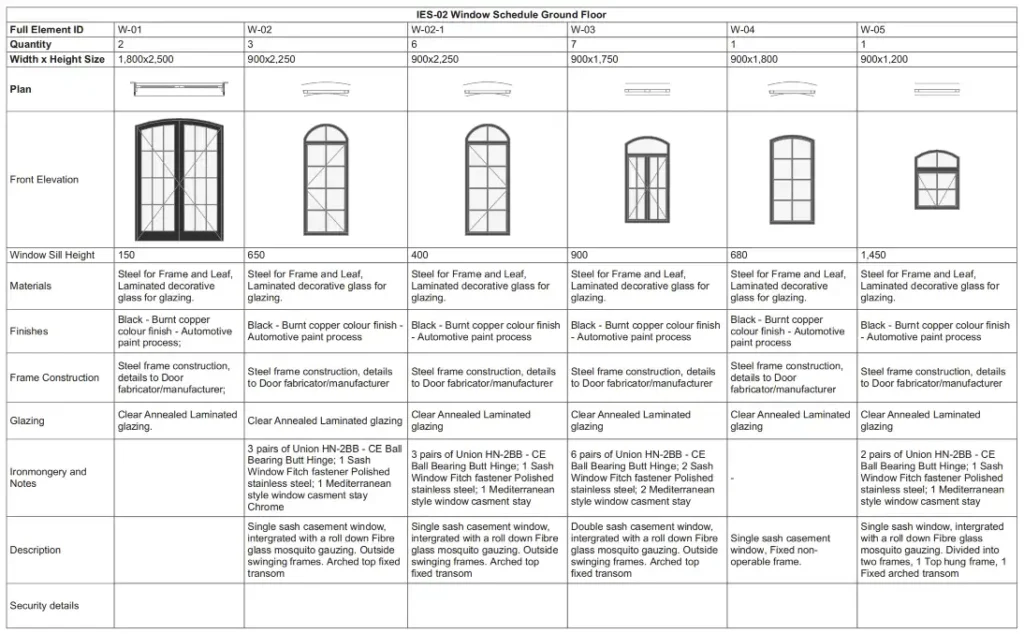
A window and door schedule is a tabulated document — usually produced by the architect or project manager — that lists every window and door unit by mark number, with corresponding size, quantity, opening type, glass specification, hardware requirements, and finish code.
Function
The schedule links the architectural drawings to the physical product. It is the primary reference for quantity confirmation, configuration matching, and cost itemization. Suppliers use the schedule to confirm that every mark number has a clear specification before production.
Key Information Required
| Schedule Column | What to Include |
|---|---|
| Mark number | Unique identifier linked to drawing location |
| Width × height | Clear opening or frame size, whichever applies |
| Quantity | Per floor, per elevation, or total count |
| Opening type | Fixed, casement, awning, sliding, tilt-and-turn |
| Glass code | Linked to glass specification document |
| Hardware | Locking, hinge, handle, closer type |
| Finish code | Powder coat color or anodize class |
| Notes | Special conditions, acoustic upgrade, spandrel, opaque |
Application Scenario
A window company compiling quotation packages from three suppliers sends the window and door schedule alongside the architectural drawings. Each supplier quotes against the same scope, allowing cost and configuration comparison without ambiguity over quantity or specification.
Recommendation
Use a consistent mark numbering system that matches the architectural drawings. If the schedule and the drawings use different references, reconcile them before submitting to the supplier. Discrepancies between schedule quantities and elevation counts are one of the most common causes of quotation revision after submission.
Glass Specification
What It Is
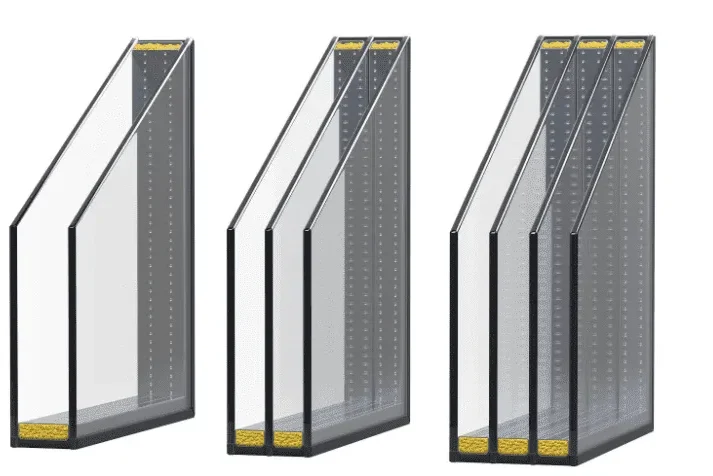
A glass specification defines the build-up, thickness, performance properties, and appearance requirements of the glass units in every window or door. For hurricane impact aluminum windows, the glass specification is particularly important because the laminated interlayer, glass thickness, and build-up directly affect impact resistance classification, system compatibility, and cost.
Function
Glass specification affects system selection (frame depth, gasket, structural silicone), hardware selection (weight-rated hinges, friction stays), production sequence, and delivery packaging. Suppliers need the glass specification before they can confirm whether the chosen aluminum system is compatible and whether additional structural or performance coordination is needed.
Key Information Required
| Glass Parameter | What to Specify |
|---|---|
| Build-up type | Monolithic, laminated, insulated (IGU), laminated IGU |
| Total thickness | Overall unit thickness in mm |
| Laminated interlayer | PVB, SGP, or equivalent; number of plies |
| Coating | Low-E, solar control, reflective, clear |
| Color / tint | Neutral, bronze, grey, blue, or specified |
| Performance targets | SHGC, VT, U-value — confirm with project specifications |
| Compliance notes | Any referenced standard, test report, or certification requirement |
Application Scenario
A dealer sourcing hurricane impact aluminum windows for a coastal hotel project receives the glass specification from the project consultant. The specification calls for a laminated insulated unit with a specific coating. The dealer submits this glass spec to the aluminum supplier before quotation so the supplier can confirm frame compatibility, glazing bead sizing, and whether any additional coordination with the glass fabricator is needed.
Recommendation
Do not assume glass build-up. A glass specification that only states “impact glass” is insufficient for supplier scope confirmation. Include at minimum the build-up type, total thickness, and any performance or standard references noted by the project consultant. Performance compliance requirements for hurricane impact glazing should be confirmed with the local code authority and project consultant before production.
Shop Drawing Checklist for Hurricane Impact Aluminum Windows
What It Is
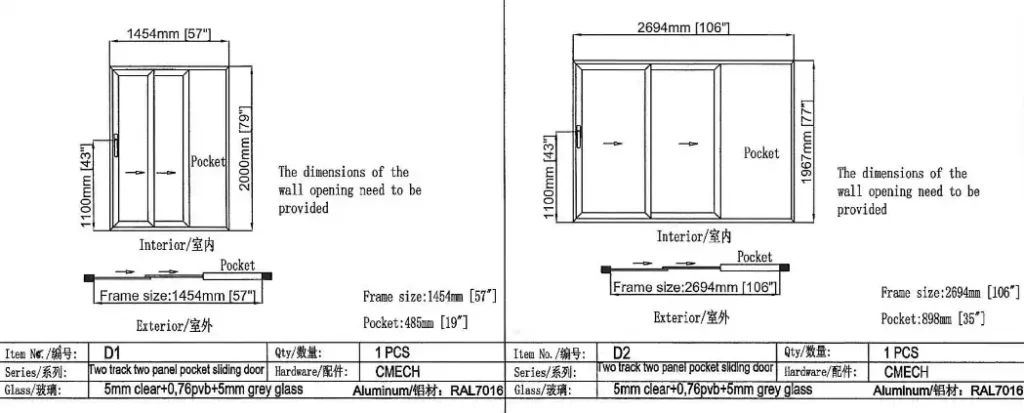
Shop drawings are technical fabrication drawings produced by the aluminum system supplier or their engineering team. They show how the system will be fabricated, how components connect, how the frame interfaces with the structure, and how the glass is retained. For hurricane impact aluminum windows, shop drawings are often required before production begins and may need consultant or engineer review.
Function
Shop drawings translate the architectural design intent into fabrication-ready detail. They help the project team confirm that the fabrication approach matches the specification, that structural connections are adequate, and that installation can proceed without field modifications.
Key Information Required
- Frame profiles — section views showing head, sill, jamb, and mullion profiles with dimensions
- Glazing details — glass retention method, gasket type, setting block position
- Anchor and fixing details — connection to structure, allowance for movement
- Hardware location — hinge, lock, and handle positions
- Waterproofing and drainage — drainage path, sealant joint locations
- Impact performance reference — notation of referenced test report or product compliance document
- Revision history — drawing number, revision level, date, approver
Application Scenario
A contractor requires shop drawing submission and approval as part of the subcontract scope for a mid-rise coastal residential project. The aluminum window supplier prepares shop drawings based on the architectural drawings and window schedule, and submits them to the project engineer for review before production is released. This review step is essential for verifying that the installation detailing meets the specified performance requirements.
Recommendation
Confirm shop drawing responsibility before signing the supply contract. Some projects require supplier-prepared shop drawings; others expect the installer to produce them. Missing clarity on this point can delay the production release and push back the delivery schedule. If test report or product certification references are required on the shop drawings, confirm what documentation is available from the supplier before committing to that requirement.
Hurricane Impact Performance Requirements: What to Confirm

What It Is
Performance requirement notes are the project-specific records of what the aluminum window system must achieve — typically expressed as wind load resistance, impact resistance classification, water infiltration resistance, air leakage limit, and sometimes acoustic or thermal performance targets.
Function
Performance requirements define the minimum technical standard the system must meet. They are usually derived from local building codes, engineer-of-record specifications, or wind load calculations. For hurricane impact aluminum windows, performance requirements are particularly critical because the applicable standards and test protocols vary by state, jurisdiction, and project type.
Key Information Required
| Performance Parameter | What to Note |
|---|---|
| Design wind pressure | Positive and negative pressure in psf or Pa |
| Impact classification | Large missile or small missile; referenced standard |
| Water penetration limit | Pressure at which no leakage, per referenced protocol |
| Air infiltration limit | CFM/ft² or equivalent, per referenced protocol |
| Thermal performance | U-value or SHGC target if specified |
| Referenced standard | e.g., ASTM, AAMA, Florida Building Code, local AHJ requirement |
| Test report requirement | Whether buyer requires current test reports from supplier |
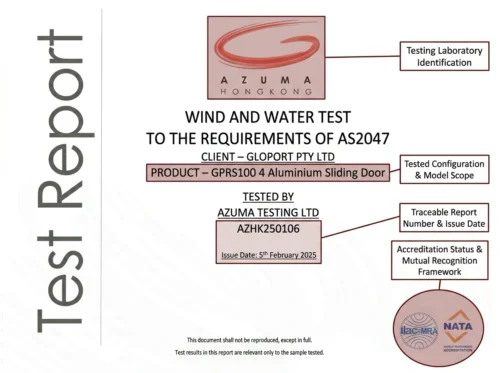
Compliance caution: Performance requirements for hurricane impact aluminum windows vary by state, jurisdiction, and project type. Requirements should always be confirmed with the project’s engineer of record, local code authority, and project specifications before selecting a system or accepting supplier compliance claims. Buyers should request test report numbers, issue dates, product scope, and issuing laboratory details before accepting any compliance statement.
Application Scenario
A contractor working on a multifamily project in a high-velocity hurricane zone receives wind load calculations from the structural engineer. The calculations specify positive and negative design pressures for each elevation. The contractor includes these pressure values and the referenced standard in the supplier inquiry. The supplier can then confirm whether the proposed system has product approval documentation that covers the stated requirements.
Recommendation
Include performance requirement notes as a separate document or clearly annotated section in the quotation package. Do not rely on verbal confirmation of compliance. Ask suppliers to identify the specific product approval or test report that covers the stated requirements, and to provide the document number, test laboratory, issue date, and scope of coverage.
Finish, Hardware, and Accessory List

What It Is
The finish and hardware list records the specified surface treatment, color, hardware brand and model, and accessory requirements for every window and door unit in the project scope.
Function
Finish and hardware decisions affect procurement timelines, cost, visual consistency, and warranty coverage. Mismatched finishes across a facade create visible inconsistency. Hardware substitutions that are not pre-approved can affect function, certification scope, or consultant acceptance.
Key Information Required
| Item | What to Specify |
|---|---|
| Finish type | Powder coating, anodizing, or other |
| Color / code | RAL code, Dulux code, anodize class, or approved sample |
| Sample approval | Whether a finish sample is required before production |
| Hardware brand | Specified brand or approved equivalent |
| Hardware model | Handle, lock, hinge, closer, friction stay model reference |
| Accessory items | Insect screens, blinds between glass, window restrictors, trickle vents |
| Tolerance and batch consistency | Whether color matching across production batches is required |
Application Scenario
A window company procuring a large volume of casement windows for a coastal apartment block prepares a finish and hardware schedule that specifies the powder coat color by RAL code, the hardware brand for the locking handle and friction stay, and whether accessory items such as restrictors and flyscreens are included in scope. This allows the supplier to confirm lead times, minimum order quantities for the specified color, and whether hardware substitutes need approval before quotation is finalized.
Recommendation
Confirm finish lead times early. Custom powder coat colors and anodize finishes sometimes require additional production preparation or minimum batch commitments. Confirm before quotation whether the specified color is a standard range item or requires custom preparation. For projects requiring sample approval, build that review step into the procurement timeline.
Packing List and Delivery Schedule

What It Is
The packing list and delivery schedule define how units will be packaged, how they will be shipped, and when and where they will be delivered. For international supply of hurricane impact aluminum windows, this document set also covers export packing, container configuration, port of entry, and unloading assumptions.
Function
Packing and delivery coordination reduces damage risk during transport, aligns delivery with site installation sequence, and avoids demurrage or storage costs from mistimed arrivals. For projects with phased construction, a delivery schedule linked to installation sequence is particularly important.
Key Information Required
| Delivery Item | What to Confirm |
|---|---|
| Delivery address | Site address, floor access, crane or hoist availability |
| Delivery timing | Required on-site date, project installation sequence |
| Packing method | Individual unit, stacked on A-frames, crated, palletized |
| Export packing | Fumigation certificate, marine export crating if required |
| Container type | 20 ft, 40 ft, 40 ft high cube, LCL vs. FCL |
| Port of entry | Import duty classification, customs documentation |
| Installation sequence | Phase 1 / Phase 2 delivery split if applicable |
| Unloading requirements | Forklift access, site restrictions, delivery window |
Application Scenario
A general contractor coordinating installation of hurricane impact aluminum windows across three building phases sends the supplier a delivery schedule that specifies on-site dates by phase, floor access conditions, and packaging requirements for corner protection. The supplier can prepare an export packing plan and shipping schedule that aligns with the contractor’s installation programme.
Recommendation
Do not treat delivery assumptions as secondary information. Delivery damage, late arrival, or installation sequence mismatches are a common source of cost disputes between contractors and suppliers. Confirm packing method, delivery timing, and site access conditions before production starts, not after shipment has been booked.
Quotation and Evaluation Checklist for Hurricane Impact Aluminum Windows

What It Is
A quotation request checklist is the compiled package of documents and information a buyer submits to one or more suppliers to initiate a formal quotation process. It serves as both a submission checklist for the buyer and a scope confirmation reference for the supplier.
Function
A well-prepared quotation request reduces back-and-forth clarification cycles, produces more comparable responses from multiple suppliers, and reduces the risk of post-quotation scope change requests. It also signals to suppliers that the buyer is a serious project buyer with a defined scope — not an exploratory inquiry.
Key Information Required
Use this checklist before submitting a quotation request for hurricane impact aluminum windows:
Project information
- Project name and location (state / city / building type)
- Project type (residential, commercial, hospitality, institutional)
- Approximate project timeline and required delivery date
Technical documents
- Architectural drawings (elevations, sections, opening details)
- Window and door schedule (mark numbers, sizes, quantities, types)
- Glass specification (build-up, thickness, coating, performance targets)
- Performance requirement notes (wind load, impact classification, referenced standard)
- Shop drawing requirement (buyer-supplied or supplier-prepared)
Product information
- Finish specification (powder coat code, anodize class, sample requirement)
- Hardware specification (brand, model, or approved equivalent)
- Accessory requirements (screens, restrictors, blinds, vents)
Compliance and documentation
- List of required test reports, product approvals, or certifications
- Any referenced standard or local AHJ requirement
- Shop drawing approval sequence and timeline
Delivery and logistics
- Delivery address and site access conditions
- Packing requirements (export packing, crating, A-frames)
- Delivery timing or phased delivery schedule
- Import documentation requirements if applicable
Recommendation
Send the same package to every supplier in the evaluation round. Quotations based on different assumptions are not comparable. If any document is still in progress, note it clearly and give a target date. A supplier who asks detailed questions about your project package before quoting is demonstrating the kind of attention to scope that matters more than the lowest number on the quotation.
Using These Documents to Evaluate Hurricane Impact Aluminum Window Suppliers

Once your document package is ready, use it to evaluate suppliers — not just for price, but for project readiness.
Step 1 Prepare the Package
Compile the full document set before sending to any supplier. Incomplete packages produce incomparable quotations. If documents are in progress, note their status and expected completion date.
Send the same package to every supplier you are evaluating. This is the only way to ensure quotations are based on the same scope.
Step 2 Ask Supplier-Specific Questions
After sending the package, ask each supplier a consistent set of questions:
- Can you confirm the proposed system covers the specified wind load and impact classification? Please provide the product approval reference, test report number, issuing laboratory, and date.
- Does your quotation include shop drawing preparation, or is that excluded from scope?
- What is the proposed glass configuration, and have you confirmed compatibility with the aluminum frame?
- What is the lead time from purchase order to delivery, and what are the assumptions behind that timeline?
- What export packing method do you use, and does that include marine export crating if required?
- Who is responsible for coordination if scope questions arise during production?
Step 3 Compare Responses
A supplier who responds to every document in your package with specific, referenced answers is demonstrating a different level of project readiness than one who provides a unit price without addressing scope.
| Evaluation Criterion | What to Look For |
|---|---|
| Quotation completeness | Does the quote address every item in the schedule? |
| Performance documentation | Can the supplier provide specific test report references? |
| Shop drawing capability | Has the supplier confirmed who prepares and reviews shop drawings? |
| Glass coordination | Has the supplier confirmed glass compatibility and sourcing? |
| Delivery detail | Is the delivery schedule tied to site conditions and project timeline? |
| Scope clarity | Does the supplier ask clarifying questions before quoting? |
| Communication quality | Are responses specific and prompt, or generic and slow? |
A supplier who addresses scope before price is usually the more reliable execution partner.
FAQ
What should project buyers confirm before requesting a quotation for hurricane impact aluminum windows?
Before requesting a quotation, confirm that you have architectural drawings, a window and door schedule, a glass specification, performance requirement notes referencing the applicable local standard, and finish and hardware details.
Without these documents, suppliers cannot provide a complete or comparable quotation. Compliance requirements for hurricane impact products vary by jurisdiction and should be confirmed with the project engineer and local code authority.
How can buyers evaluate suppliers beyond unit price?
Ask each supplier to respond to the same document package and provide references for any performance documentation they claim. Evaluate responsiveness to scope questions, shop drawing capability, glass coordination process, delivery detail, and whether they ask clarifying questions before quoting.
A supplier who demonstrates scope awareness before quotation typically delivers fewer surprises during production and delivery.
What drawings or schedules are needed before quotation?
At minimum: architectural elevations and section details showing opening dimensions and surrounding conditions, and a window and door schedule listing mark numbers, sizes, quantities, opening types, glass codes, hardware, and finish.
If shop drawings are required, confirm who is responsible for preparing and submitting them.
Which performance or compliance requirements should be checked?
Performance requirements for hurricane impact aluminum windows vary by state, jurisdiction, building type, and exposure category. Confirm the design wind pressure, impact classification, water infiltration limit, and air leakage limit with the project’s engineer of record and local AHJ.
Ask suppliers to provide specific product approval or test report references — including document number, issuing laboratory, date, and scope of product coverage — rather than general compliance statements.
What cost factors can change the final project quotation?
Key cost variables include glass build-up and total thickness, finish type and color (custom colors may carry a surcharge), hardware brand and model, export packing requirements, delivery method and timing, and shop drawing scope. Changes to any of these after quotation is issued typically result in a revised price.
Confirming all specifications before quotation reduces post-submission revision cycles.
How can delivery or installation risks be reduced?
Confirm delivery timing, site access conditions, packing method, and installation sequence before production starts. For phased projects, agree on a staged delivery plan in writing.
For international supply, confirm export packing, port of entry requirements, and import documentation before the supplier finalises the shipping plan. Delivery damage and sequence mismatches are more common when logistics assumptions are left unconfirmed until shipment.
When should a project buyer contact APRO for review?
Contact APRO when you have project drawings, a window and door schedule, and basic performance or glass requirements available — even if those documents are still in draft form.
A pre-quotation review at that stage allows APRO to flag scope gaps, confirm system compatibility, and prepare a more accurate quotation. Waiting until documents are fully issued often compresses the available quotation and review timeline.
What documents are needed before requesting a quotation for hurricane impact aluminum windows?
The core document set includes: architectural drawings (elevations and sections), window and door schedule, glass specification, performance requirement notes with referenced standards, finish and hardware schedule, and delivery assumptions.
Projects with specific compliance obligations may also need to confirm what product approval or test report documentation is required before supplier selection.
Conclusion / What to Do Next

A reliable procurement process for hurricane impact aluminum windows starts with the right documents — not with a price request. Before you approach any supplier, prepare your architectural drawings, window and door schedule, glass specification, performance requirement notes, finish and hardware list, and delivery assumptions. The quality of the quotations you receive will reflect the quality of the information you submit.
Once your document package is ready:
- Submit the same package to each supplier you are evaluating.
- Ask each supplier to confirm performance documentation references by report number, laboratory, date, and product scope.
- Compare responses on scope completeness, engineering awareness, and communication quality — not only on unit price.
- Confirm shop drawing responsibility, glass coordination, and delivery logistics before issuing a purchase order.
If you are at the pre-quotation stage and ready to review your project scope, APRO can assist with document review, system compatibility discussion, and quotation preparation for aluminum window, door, curtain wall, storefront, and facade scopes.
CTA
Ready to prepare your project quotation package?
Send APRO your project documents for a pre-quotation review. To provide useful feedback or prepare a scope-based quotation, we typically need:
- Architectural drawings (elevations, sections, opening details)
- Window and door schedule (mark numbers, sizes, quantities, types)
- Glass specification (build-up, coating, performance targets)
- Performance requirement notes (wind load, impact classification, referenced standard)
- Finish and hardware requirements (powder coat code, hardware brand/model)
- Project location (state, city, building type, exposure category)
- Delivery assumptions (site address, required on-site date, packing requirements)
- Quotation scope notes (which items require product approval documentation)
The more complete your submission, the faster and more useful the review. Drawings and schedules in draft form are acceptable — note the revision status clearly.