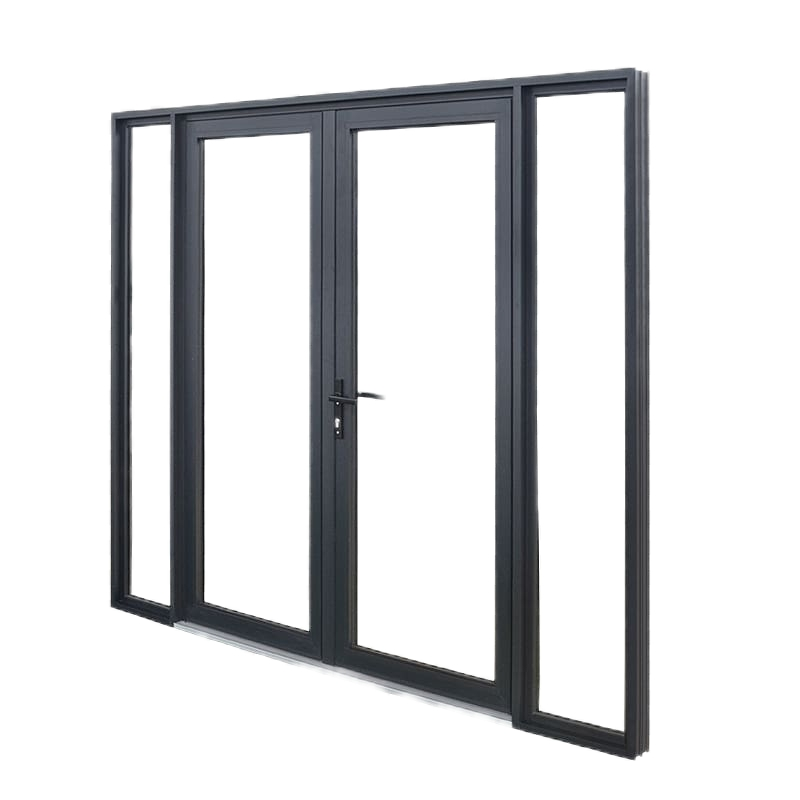

















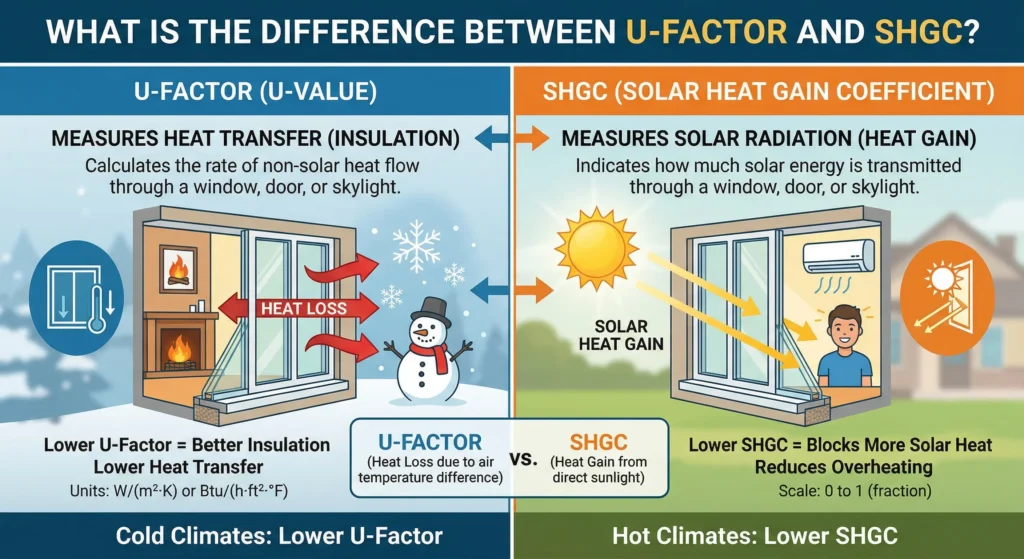
The core difference between u-factor vs shgc comes down to heat direction and light source. U-Factor measures how much non-solar heat escapes from the inside of your building to the outside. Solar Heat Gain Coefficient (SHGC) measures how much solar radiation enters your building from the sun. Essentially, U-Factor controls winter heat loss, while SHGC controls summer solar heat gain.
Quick Guide: Core Differences Between U-Factor and SHGC
Are you looking at a window quote and feeling confused by the numbers? You are not alone. Let us break this down simply.
U-Factor Measures “How Much Heat Escapes”
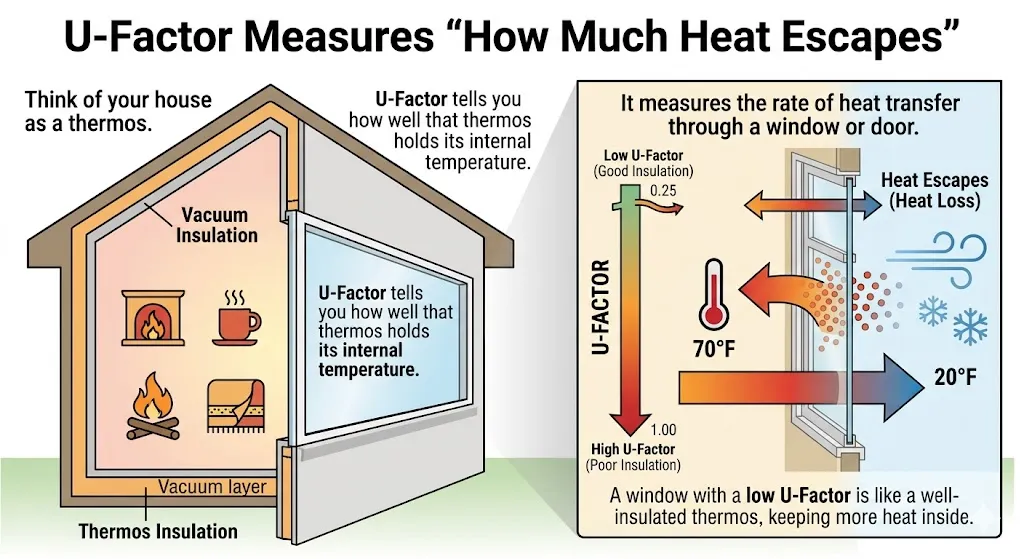
Think of your house as a thermos. U-Factor tells you how well that thermos holds its internal temperature. It measures the rate of heat transfer through a window or door.
SHGC Measures “How Much Solar Heat Enters”
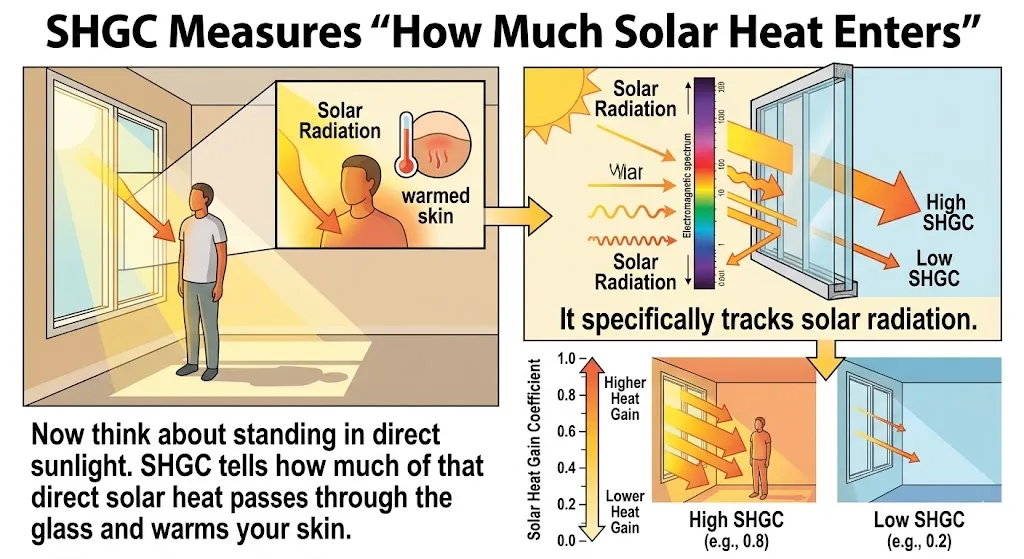
Now think about standing in direct sunlight. SHGC tells you how much of that direct solar heat passes through the glass and warms your skin. It specifically tracks solar radiation.
One Controls Heat Loss, the Other Controls Solar Heat Gain
These two metrics handle completely different thermal challenges. U-Factor deals with temperature differences between indoor and outdoor air. SHGC deals only with the sun.
| Feature | U-Factor | SHGC (Solar Heat Gain Coefficient) |
| Primary Function | Blocks indoor heat from escaping. | Blocks solar heat from entering. |
| Heat Source | Ambient air temperature differences. | Direct solar radiation from the sun. |
| Ideal for Cold Climates | Lower numbers are better. | Higher numbers can help passively heat the room. |
| Ideal for Hot Climates | Lower numbers are helpful. | Lower numbers are absolutely essential. |
| Typical Scale | 0.20 to 1.20 | 0.00 to 1.00 |
What is U-Factor in Windows?
Understanding what is u-factor in windows requires a quick look at basic physics. Heat always wants to move to a colder space.
The Official Definition of U-Factor
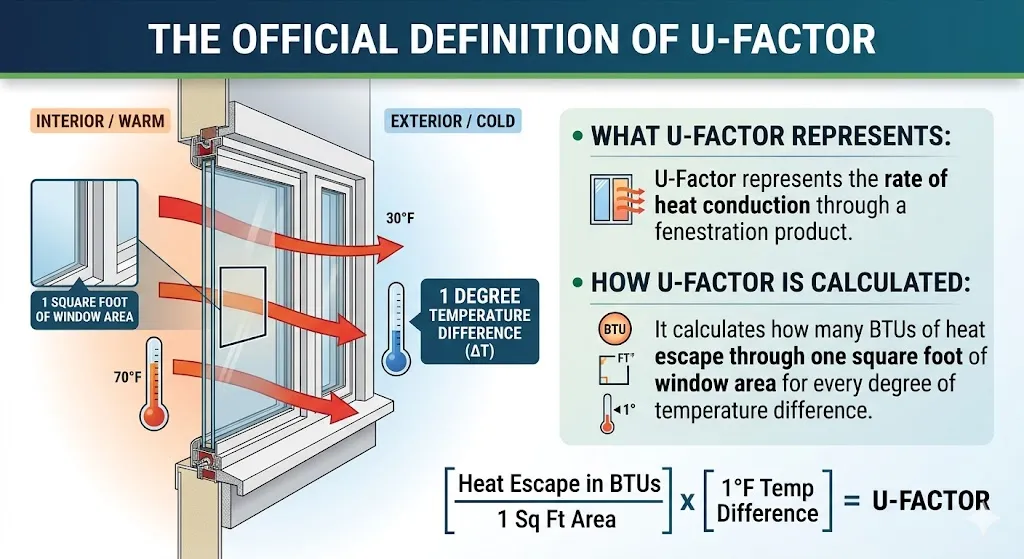
U-Factor represents the rate of heat conduction through a fenestration product. It calculates how many BTUs of heat escape through one square foot of window area for every degree of temperature difference.
Why is a Lower U-Factor Usually Better?
A lower number simply means less heat escapes. This translates directly to better insulation. If you have a low U-Factor, your heating system works much less during the winter.
According to the U.S. Department of Energy, heat gain and heat loss through windows account for about 25% to 30% of residential heating and cooling energy use, which is why both U-Factor and SHGC matter in window and door selection.
Whole-Window Rating vs Center of Glass
This is where many buyers make a critical mistake. Are you looking at the glass alone or the entire product?
In our factory communication with overseas buyers, one of the most common misunderstandings is focusing only on the glass package while ignoring the whole-unit rating. In actual product development, frame design, thermal break structure, spacer, and sealing details can all change the final U-Factor of the complete window or door. That is why we prefer to discuss NFRC whole-unit data rather than center-of-glass numbers only.
What is SHGC in Windows?
Now we switch our focus from ambient air to direct sunlight. What is shgc in windows, and why does it matter?
The Official Definition of SHGC
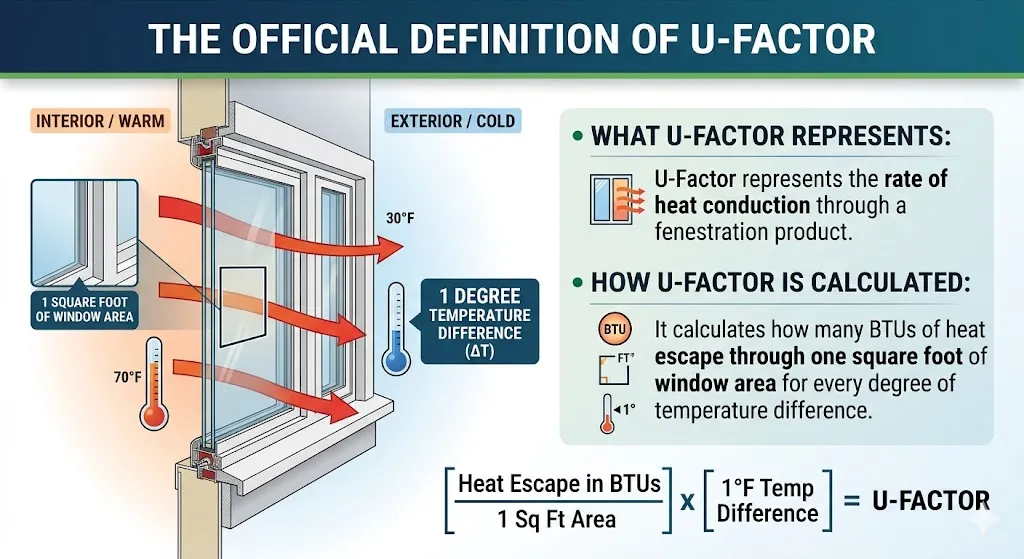
Solar Heat Gain Coefficient measures the fraction of incident solar radiation admitted through a window. This includes heat transmitted directly and heat absorbed by the glass that radiates inward. It operates on a scale from 0 to 1.
Why a Lower SHGC Usually Means Stronger Shading
A lower SHGC rating means the window blocks more solar heat. Think of it like wearing high-quality sunglasses. If the rating is 0.25, the window only allows 25% of the sun’s heat to pass through.
When You Shouldn’t Blindly Chase a Low SHGC
Does every project need a near-zero SHGC? Absolutely not. In our experience, pushing this number too low in a freezing climate is a mistake. You actually want the winter sun to enter and warm the room.
5 Key Differences Between U-Factor vs SHGC
To truly grasp the u-factor vs shgc difference, we need to compare their functional roles. We’ve found that breaking them down into five categories helps buyers make better decisions.
Difference 1: Measurement Focus
U-Factor measures thermal conductance across the entire assembly. It tests how well the frame and glass resist temperature equalization. SHGC measures solar transmittance. It tests how well the unit acts as a shield against the sun.
Difference 2: Impact on Indoor Comfort
U-Factor prevents cold drafts near the window in winter. It keeps the interior glass surface warm. SHGC prevents the “greenhouse effect” in summer. It stops your living room from feeling like a sauna on a July afternoon.
Difference 3: Climate Priorities
Cold climates demand incredible U-Factor performance to survive harsh winters. Hot climates prioritize SHGC to keep air conditioning systems from failing under solar load. We will explore this specific detail later.
Difference 4: Optimization Methods
Manufacturers improve U-Factor by adding argon gas, using warm-edge spacers, and creating thermal breaks in the frame. Manufacturers improve SHGC primarily through specialized Low-E glass coatings and glass tints.
Difference 5: Project Procurement Priorities
When ordering materials, builders look at U-Factor to comply with basic wall insulation codes. They look at SHGC to accurately size the building’s HVAC cooling system. Both numbers dictate different construction budgets.
Hot, Cold, or Mixed Climates: Which One to Prioritize?
Where is your project located? This tends to be the most important question we ask our clients. Climate completely dictates your fenestration strategy.

Hot Climates: Focus Heavily on Low SHGC
If you build in a desert, the sun is your primary enemy. You need to block solar radiation at all costs.
A DOE case study in Tucson, Arizona shows that in hot-dry climates, window performance decisions are not made by U-Factor alone. The design team reduced window area, added overhangs on east-, south-, and west-facing elevations, and used low-e double-pane windows with U=0.38 and SHGC=0.30 to better control cooling loads.
Cold Climates: Focus Heavily on Low U-Factor
Freezing winters require a completely different approach. Your goal is trapping the expensive heat your furnace produces.
In a DOE Zero Energy Ready Home project in Massachusetts, the builder used triple-pane, low-e, krypton-filled windows with U=0.21 and SHGC=0.19 as part of a high-performance envelope strategy. The case highlights that in cold-climate projects, improving insulation performance often starts with a much lower whole-window U-Factor, not just a glazing upgrade.
Mixed Climates: Balancing Both Metrics
What if you live somewhere with blistering summers and freezing winters? You have to compromise. You need a solid U-Factor around 0.30 to handle the winter. You also need a moderate SHGC around 0.30 to manage the summer sun.
How Building Orientation Changes the Decision
Orientation changes everything. From what we’ve seen, a south-facing window needs a much lower SHGC than a north-facing window. North-facing walls receive almost no direct sunlight, making U-Factor the only metric that truly matters there.
Which Window Components Affect Both U-Factor and SHGC?
You cannot change one parameter without often affecting the other. How do specific factory components alter the u-factor and shgc difference?
Double or Triple Pane Insulated Glass
Adding more layers of glass traps more insulating air. This drastically lowers the U-Factor.
Industry media citing ASHRAE 90.1 methodology has reported that, with the same low-e coating, frame, spacer, and gas fill, moving from double to triple glazing in commercial window wall systems can reduce U-Factor by about 0.05 and SHGC by about 0.03 on average.
Low-E Glass Coatings
Low-E glass u-factor shgc dynamics are fascinating. These microscopic metallic coatings reflect heat. They bounce winter heat back inside to improve U-Factor. They also bounce summer solar radiation away to lower SHGC.
Thermal Break Aluminum Profiles
Aluminum conducts heat quickly. To stop this, factories insert a structural plastic strip called a thermal break inside the frame. This stops heat loss and significantly improves the overall window u-factor.
Spacers and Sealing Systems
The spacer holds the glass panes apart. Old aluminum spacers leak heat at the glass edges. Using warm-edge silicone or composite spacers improves the U-Factor near the frame edge.
Glass Tints and Shading Designs
Tinting the glass gray or bronze reduces SHGC heavily. It blocks solar energy. However, it barely changes the U-Factor because it does not stop conductive heat transfer.
Why Aluminum Windows Demand Attention to Both Metrics
If you specify aluminum commercial doors or residential windows, you must watch these numbers closely. Why is aluminum so sensitive?
Why Aluminum’s High Conductivity Requires Whole-Unit U-Factor Focus
Standard aluminum transfers cold air right into a room. A poor frame ruins a great glass package. You must demand thermal break profiles and check the whole-unit rating windows data to ensure compliance.
Why Large Glazing Areas Demand Strict SHGC Control
Aluminum framing is extremely strong. This allows for massive, floor-to-ceiling glass panels. While beautiful, giant glass walls let in massive amounts of solar heat. You must specify a low solar heat gain coefficient windows package to prevent overheating.
How Thermal Breaks, Glass, and Orientation Work Together
A well-designed building combines all three elements. The thermal break manages the U-Factor. The Low-E glass manages the SHGC. The architect designs overhangs to block high summer sun while allowing low winter sun to enter.
How to Read U-Factor and SHGC on an NFRC Label
Every reputable window carries an NFRC sticker. How do you decode it?
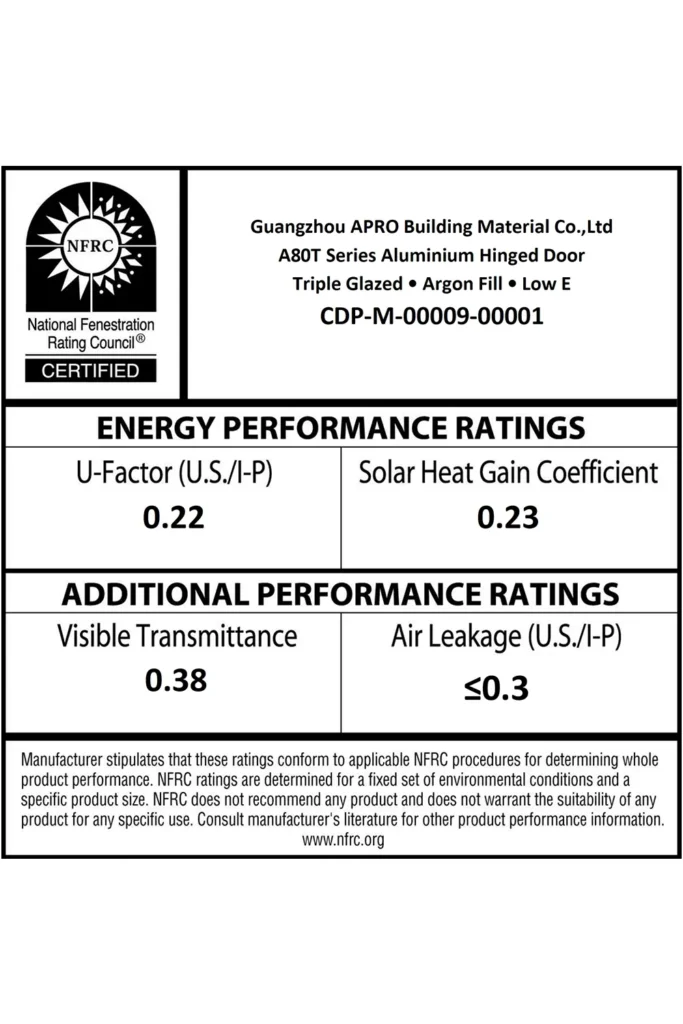
Core Parameters Displayed on the Label
The label clearly prints the U-Factor in the top left box. The SHGC sits right next to it. You will also see Visible Transmittance (VT) and Air Leakage (AL) below them.
Why You Must Look at the Whole-Unit Rating
The NFRC label u-factor shgc numbers reflect the entire product. It calculates the glass, the frame, and the spacers combined. This prevents manufacturers from hiding a poorly designed frame behind a high-performing piece of glass.
How to Fairly Compare Different Products
Always use the NFRC label to compare products. Do not trust marketing brochures that only list the “center of glass” U-value. The whole-window U-Factor is the only legally recognized number for energy code compliance.
Using U-Factor and SHGC Together in Project Procurement
Different players in the construction industry view these numbers differently. How does the B2B supply chain use this data?
What Developers Care About
Developers care about the bottom line. Better ratings mean they can advertise lower utility bills to potential buyers.
ENERGY STAR states that certified windows, doors, and skylights can reduce household heating and cooling costs by an average of up to 13% nationwide, showing that better fenestration performance can translate into measurable operating savings.
What General Contractors and Subcontractors Prioritize
Contractors care about passing building inspections. They look at the U-Factor and SHGC on the approved shop drawings. They just need the delivered windows to match the architect’s specific energy schedule.
How Dealers and Procurement Teams Do Initial Screening
Purchasing managers use these numbers to filter out unqualified factories. If a supplier cannot provide an NFRC whole-unit report, the procurement team immediately moves on to a more professional vendor.
Why Chasing a Single Lowest Parameter is a Mistake
Do not obsess over hitting a 0.18 U-Factor if it destroys your budget. It depends on your climate zone. Buying extreme arctic windows for a house in Florida is a massive waste of project capital.
6 Common Mistakes When Buying Windows and Doors
Buyers make thermal performance mistakes every day. We see these errors frequently in the quoting phase.
Mistake 1: Assuming the Lowest U-Factor is Always the Best
A lower U-Factor costs more money. If you live in a mild climate, paying double for a microscopic drop in U-Factor will never pay off in energy savings.
Mistake 2: Thinking the Lowest SHGC is Always Ideal
If you buy a window with an extremely low SHGC for a freezing climate, you lose free winter solar heating. Your furnace will have to work harder to replace the sun’s natural energy.
Mistake 3: Looking Only at the Glass, Not the Whole Window
We mentioned this before, but it bears repeating. U-factor whole window vs center of glass is a trap. The frame can degrade the window’s total performance by up to 30%.
Mistake 4: Ignoring Climate and Orientation
Buying identical windows for all four sides of a building is inefficient. The west-facing wall needs aggressive SHGC control. The north-facing wall just needs strong U-Factor insulation.
Mistake 5: Confusing NFRC Ratings with AAMA Structural Performance
NFRC measures energy. AAMA measures structural strength against wind and rain. A highly insulated window can still blow out in a hurricane if it lacks the proper structural rating.
Mistake 6: Treating Energy Ratings as Total Product Quality
A window with perfect NFRC numbers can still have cheap hardware. It can still use low-quality weather stripping that fails in two years. Energy ratings are only one part of the quality equation.
Final Thoughts: U-Factor Controls “Heat Loss”, SHGC Controls “Solar Gain”
You now possess the knowledge to read a fenestration schedule confidently. Keep the core concepts straight. U-Factor manages ambient air temperature differences. SHGC manages direct solar radiation. Select your windows based on your local climate, your building’s orientation, and reliable whole-unit data.
Frequently Asked Questions About U-Factor and SHGC
We regularly answer questions about how to read nfrc label data. Here are the most common inquiries we receive.
Which is more important, U-Factor or SHGC?
It depends entirely on your location. Northern climates prioritize U-Factor to stop winter heat loss. Southern climates prioritize SHGC to block intense summer sun.
Should cold climates choose low U-Factor or low SHGC?
Cold climates must choose a low U-Factor. They actually benefit from a slightly higher SHGC, which allows winter sunlight to enter and naturally warm the home.
Why do hot climates care more about SHGC?
Air conditioning systems consume massive amounts of electricity. A low SHGC blocks the solar radiation that rapidly heats up interior rooms, taking a huge load off the HVAC system.
Is double glazing always better than single glazing?
Yes. Double glazing adds an insulating airspace that dramatically improves both the U-Factor and the overall indoor comfort level compared to outdated single-pane glass.
Does Low-E glass affect both U-Factor and SHGC?
Yes, it absolutely does. Low-E coatings reflect long-wave infrared heat back inside to improve U-Factor. They also reflect short-wave solar radiation outside to lower SHGC.
Why do two visually similar windows have different ratings?
The differences are hidden inside. One might use argon gas, a warm-edge spacer, and a complex thermal break. The other might use dry air, an aluminum spacer, and a basic frame.
Can I directly compare NFRC label numbers across different brands?
Yes. That is exactly why the NFRC label exists. It provides a standardized, third-party testing method so you can compare a window from Brand A directly against a window from Brand B.